Leccino
golden-yellow, shades of green
Quite rustic in nature. It is not overly aromatic, has a slight bitter aftertaste, and a hint of spiciness.
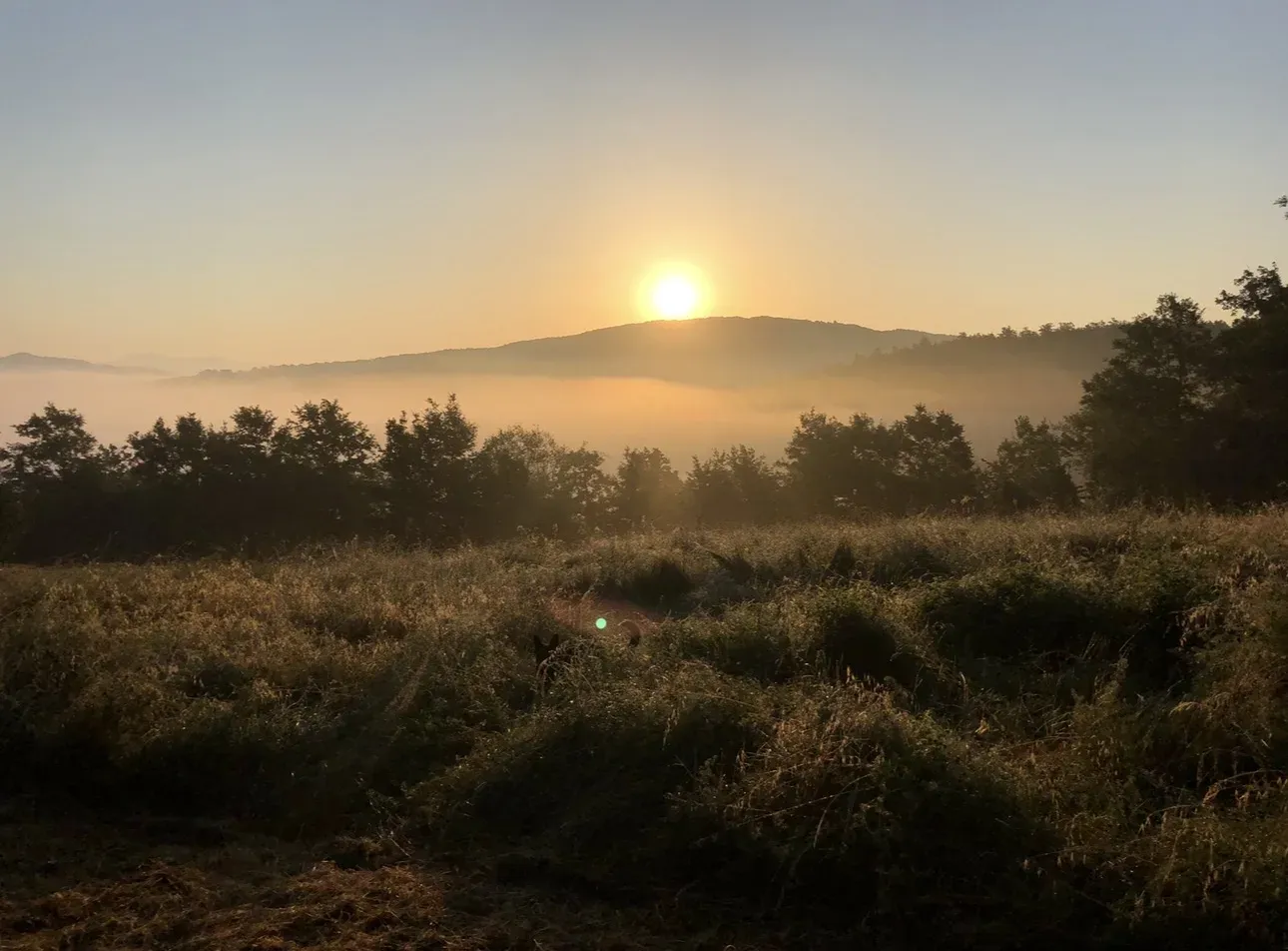
Niccone valley · Umbria · 450–500 m
A boutique producer of olive oil and art in Umbria, Italy, where oil and art combine to create magic.
We are an historic farm which combines in a natural and meaningful way the creative passions of art, gardening, and cooking. Our goal is to excite the senses, embolden the spirit, and inspire the imagination.
The farm
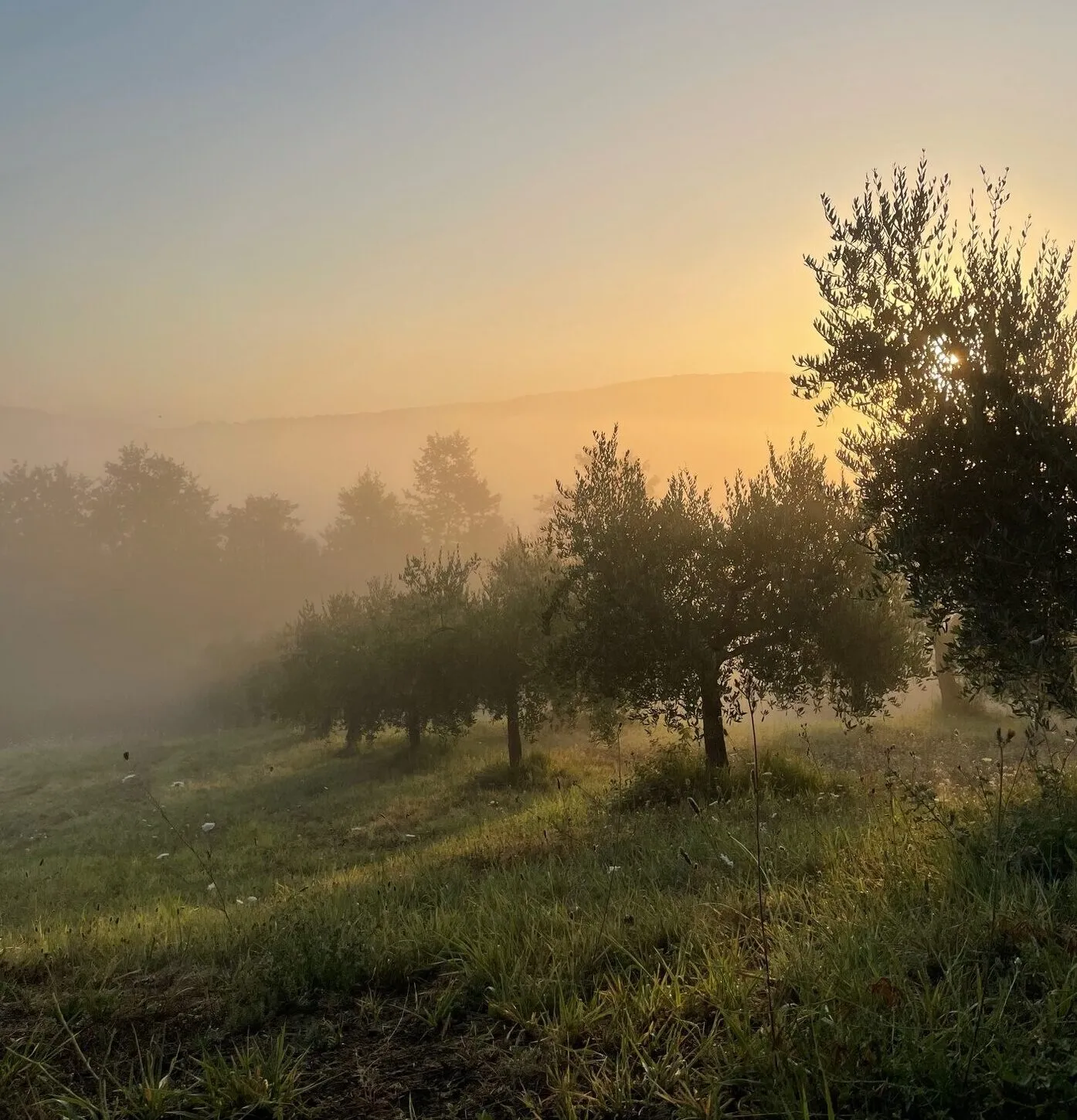
Our olive groves sit high in the Niccone Valley, a picturesque, unspoiled, hilly region located in Umbria, Italy. Here the sun remakes the world: its light reveals the hidden contours of the valley, its warmth draws forth the inner spirit of its inhabitants, and its power heightens the drama and the immediacy of the work undertaken.
How it all began
Our farm is named Sambucaro. Sambuca is a flowering plant commonly referred to as elderflower. Sambucaro means the place of the elderflower.
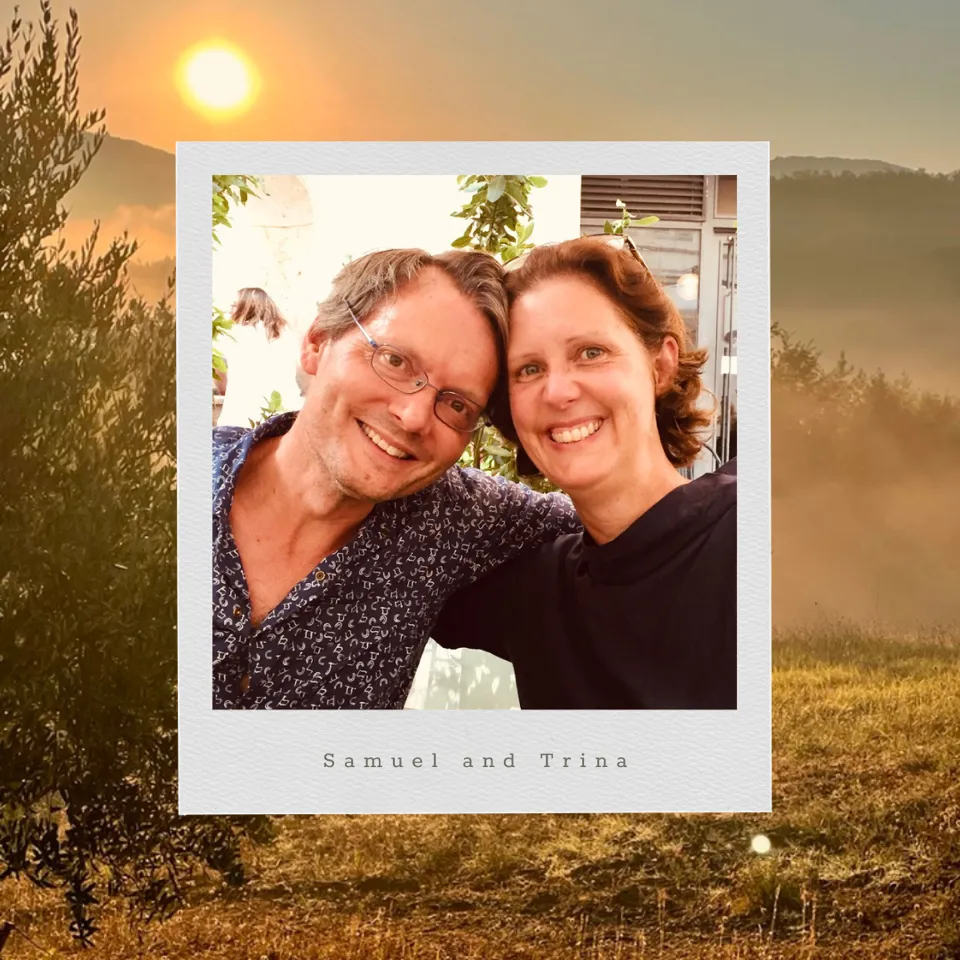
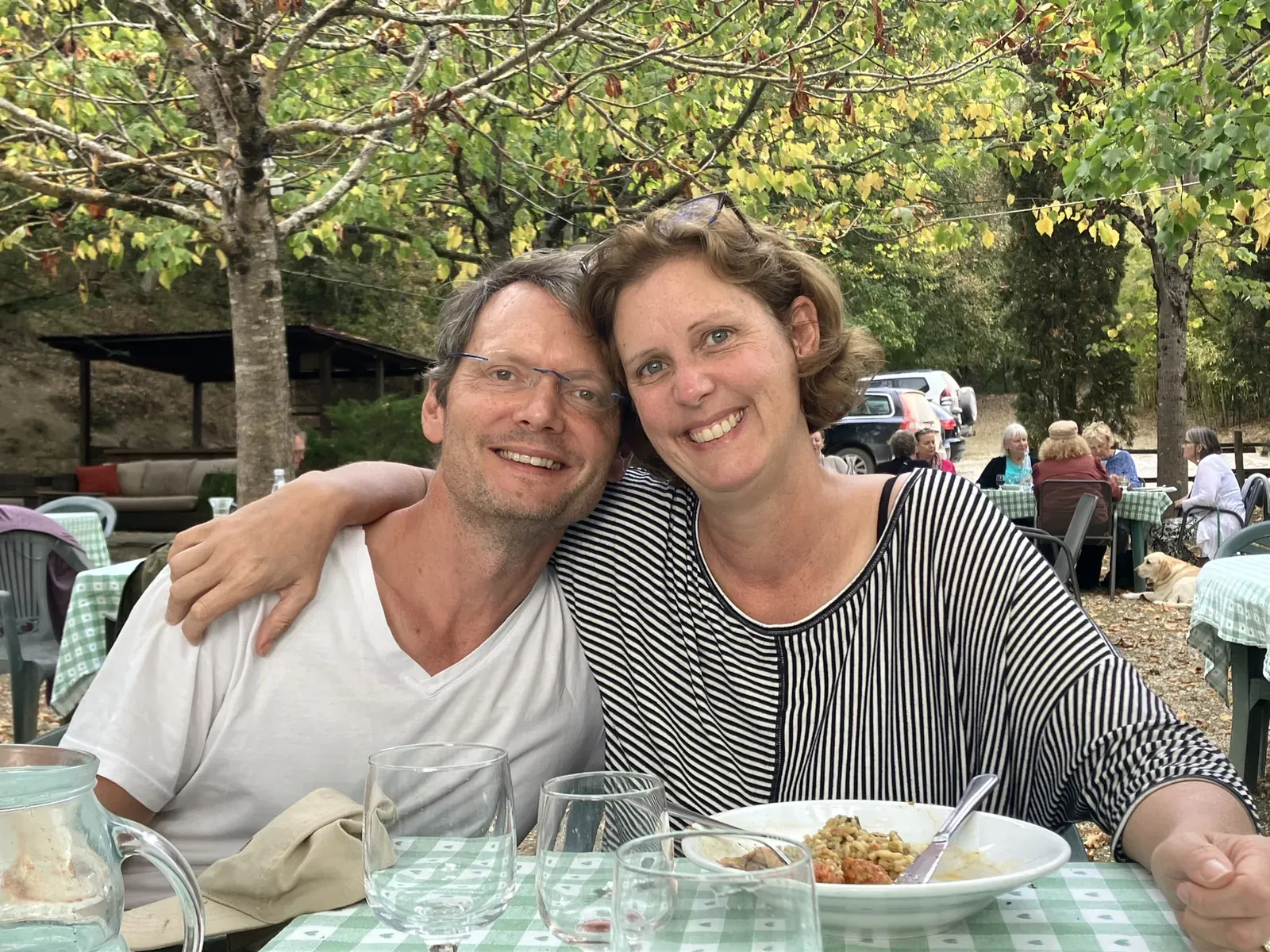
Sambucaro olive oil was established when Samuel and his father Michael sought to move to this region and away from the busy urban lifestyle. Samuel arrived here with his family, Trina and their daughter, Alix, at the end of 2018.
Until that point, Samuel and Trina had led a very international life; a good fortune and experience that they continue to treasure deeply. Their background encouraged them to see the benefits that can arise from the mixing of cultures, the exchange of ideas, and sharing of experiences. It revealed to them that everywhere has something positive to be enjoyed and nurtured, respected and encouraged to flourish.
Italy is meaningful for everyone in the family. Trina loves art and the interplay of the traditional and contemporary. She especially admires places and people who have been able to pursue this exchange between past and present with great and repeated success. Before arriving to live here, Trina would visit Italy every year to study classical painting techniques.
For Samuel the country and the culture has touched him in almost every aspect of his life. Samuel’s earliest memories are of Rome, where his father worked at the time, and of the farms near Orvieto where his mother completed her journey to becoming a first-rate cook. One of his brothers later ran an Italian restaurant in Australia. Even later, another brother was named Cosimo, partly in recognition that he came into the world on the six hundredth anniversary of the birth of Cosimo de’ Medici.
Samuel and Trina got married to the music of Vivaldi; meaning that, also in this sense, Italy became the soundtrack for their life together. And their daughter, Alix, was baptized in Rome at the Oratory of San Francesco Saverio del Caravita. She then pursued her schooling at Montessori establishments.
Samuel grew up watching Italian films like La Dolce Vita and reading Italian books like The Leopard and The Name of the Rose, among others. And he still remembers well the evening he saw Pavarotti singing the opera, Tosca, in Rome.
More recently Trina and Samuel have attended the University for Foreigners in Perugia, which helped them to better understand, in a more profound way, all the influences Italy has had on their lives. The University also helped them to discover new treasures existing in Italy and along the way it made them love even more this amazing country.
At the university, they became interested in the Divine Comedy of Dante for the first time, something that Samuel would have thought impossible beforehand. They discovered the vast array of excellent Italian films. And they experienced the joys of translation, which became, at least for Samuel, his favourite class. The university offered them tantalising glimpses into the various ways Italians see and approach their world.
Thanks to the university, Trina and Samuel managed to dive into Italian life. At least they managed to haggle better at the antique markets where Trina buys old Italian picture frames and Samuel buys Italian books.
Our philosophy
Guided by a deep respect for tradition and a passion for olive oil, we are a boutique producer of olive oil situated in Umbria, Italy, where we nurture our olive groves to ensure that our oil embodies a harmonious blend of taste, quality, heritage, and sustainability, and that it reflects our ambition of bringing people together from around the world in a shared experience, a common moment, that dates back thousands of years. We are not, however, a commercial enterprise and currently sell no oil but instead use what limited oil we do make for personal living and enjoyment.
In general terms we take inspiration from Italy’s own ‘slow food’ movement, which started in Rome in 1986 (slowfood.com). The aim is not just to bring back to vibrant life a typical working Italian farm but also to promote now unused, historical plant varietals and to return lost knowledge about old species and forgotten approaches to cooking and eating. Ideas that you can find in unusual books such as Profumi e sapori perduti: il fascino della frutta antica.
This reflects a fear that our relationship to nature and to food might now be wholly commodified; whether at the top end of the market or elsewhere; whether it is glamping or Michelin stars or bestseller lists. There may be decreasing scope left for the local, the imperfect, the inefficient, or the wayward, and so for the individual, the unusual and the serendipitous.
We dream of developing Sambucaro somewhat along the lines of Benton End in England, which mixed together in a successful and meaningful way the creative passions of art, gardening, and cooking.
In any case, our life and the work we do finds its own time or best moment in step with the nature around us and the seasons. We find there is an ebb and flow in the levels of energy and productivity across the year depending on how circumstances come together and how we or others tackle the day.
We draw inspiration both from our setting and from our dreams rather than forcefully creating and driving through a schedule or a plan, rather than imposing a relentless and perhaps untethered desire for full control, immediate gratification, or perfect certainty. We are patient to allow things to happen and flourish rather than impatient to clearly secure a guaranteed return, which desire often creates tension and proves counterproductive.
We equate the slow life with ‘the good life’; one less driven by abstract ideals or external pressures which may have little real link either with one’s own, individual personality or with nature and its cycles. We believe in the power of nature working its magic through time, community and conversation.
This is how life should be. It has meaning, is given special value, precisely because we create, sustain, and hold important concrete relationships in some form or other, with nature, with other people, and with the past; whether the relationship is based on family, love, friendship, or respect.
The good oil
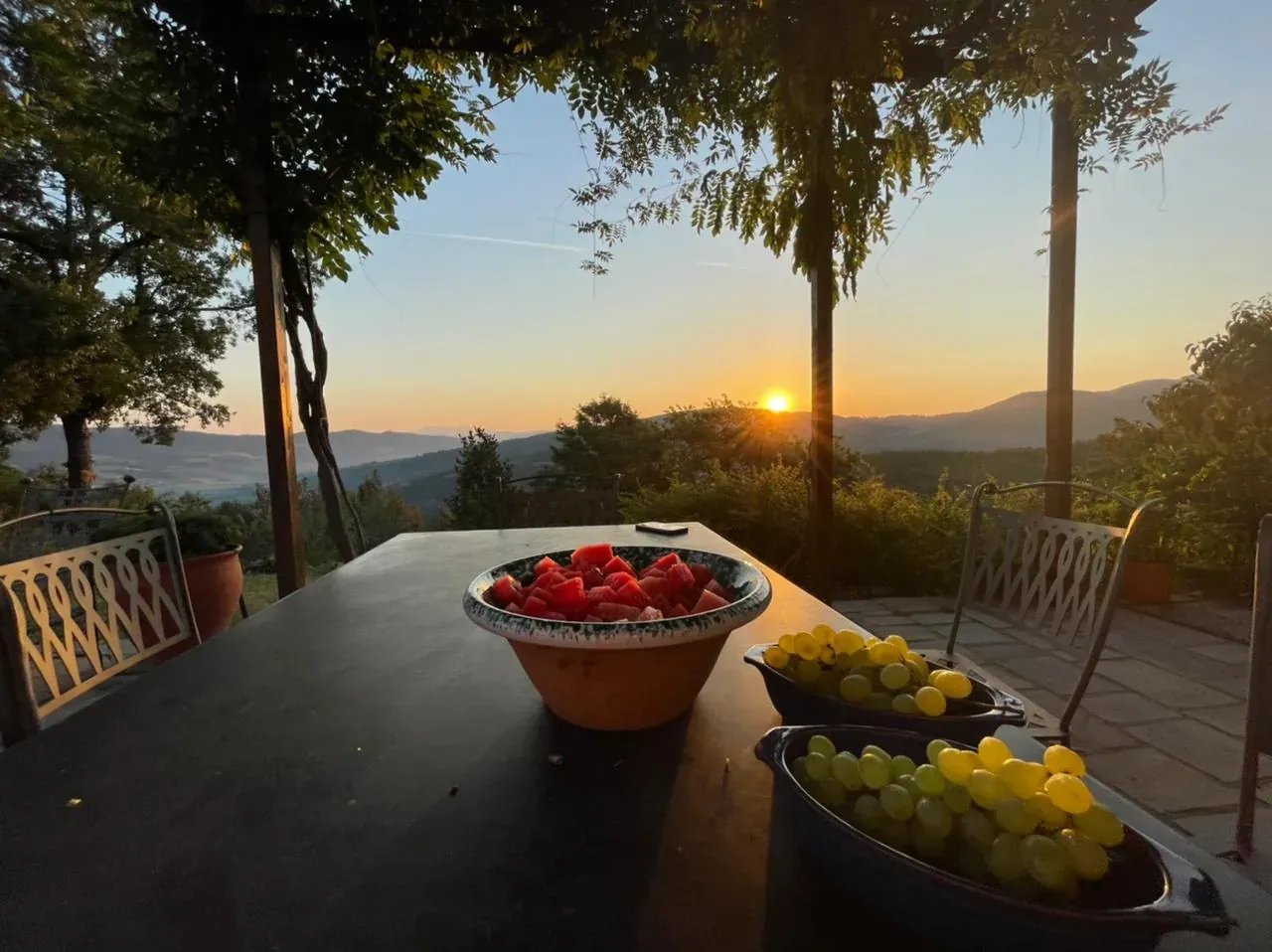
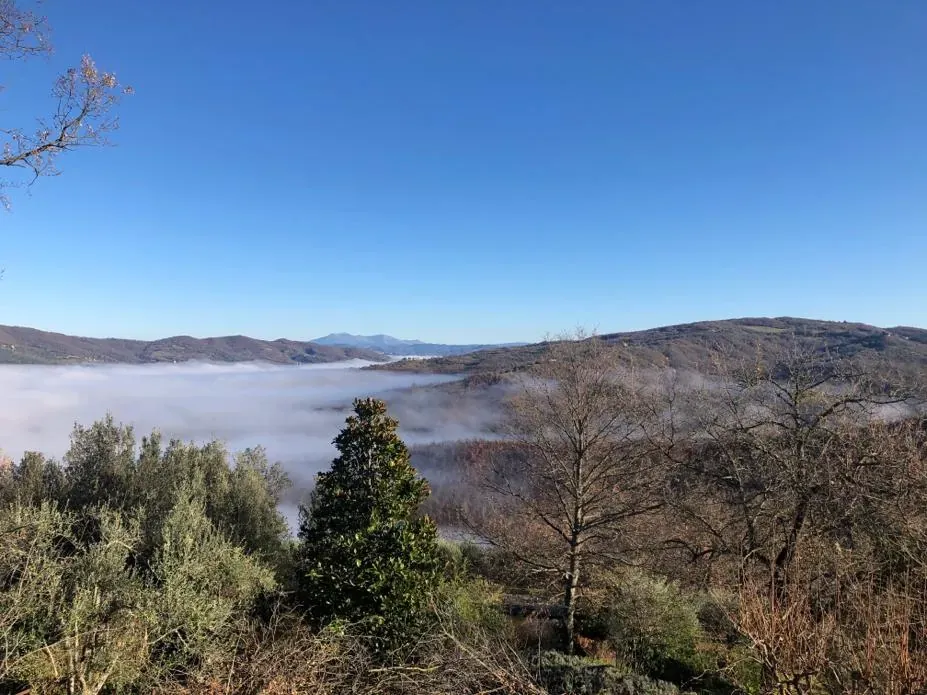
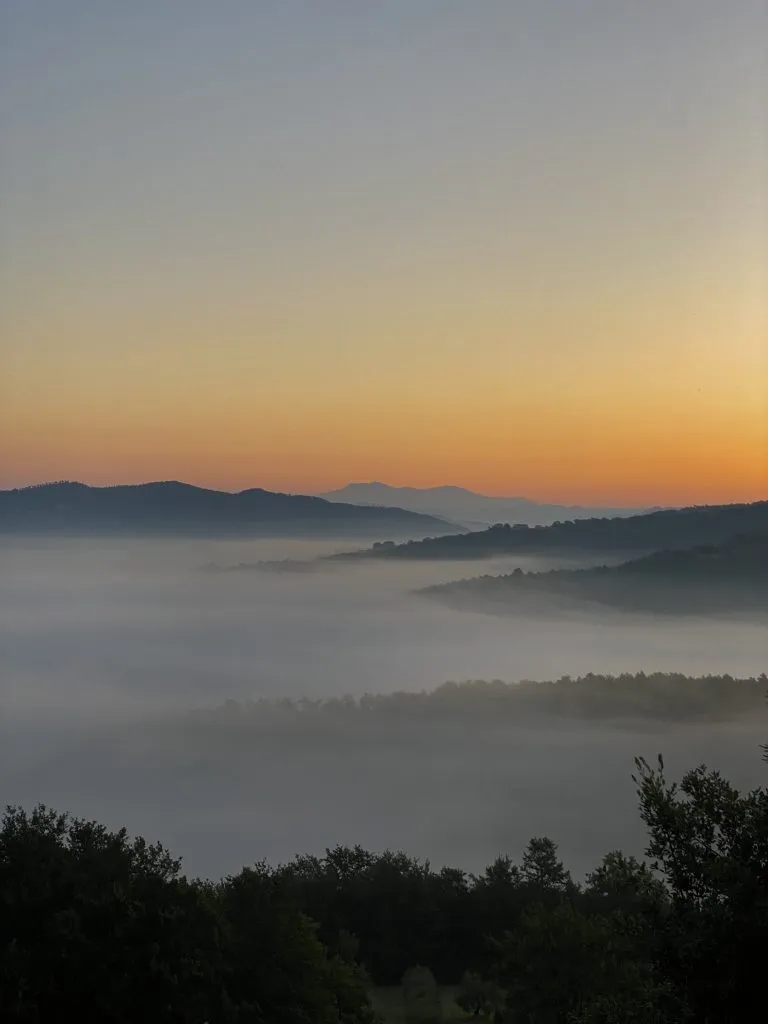
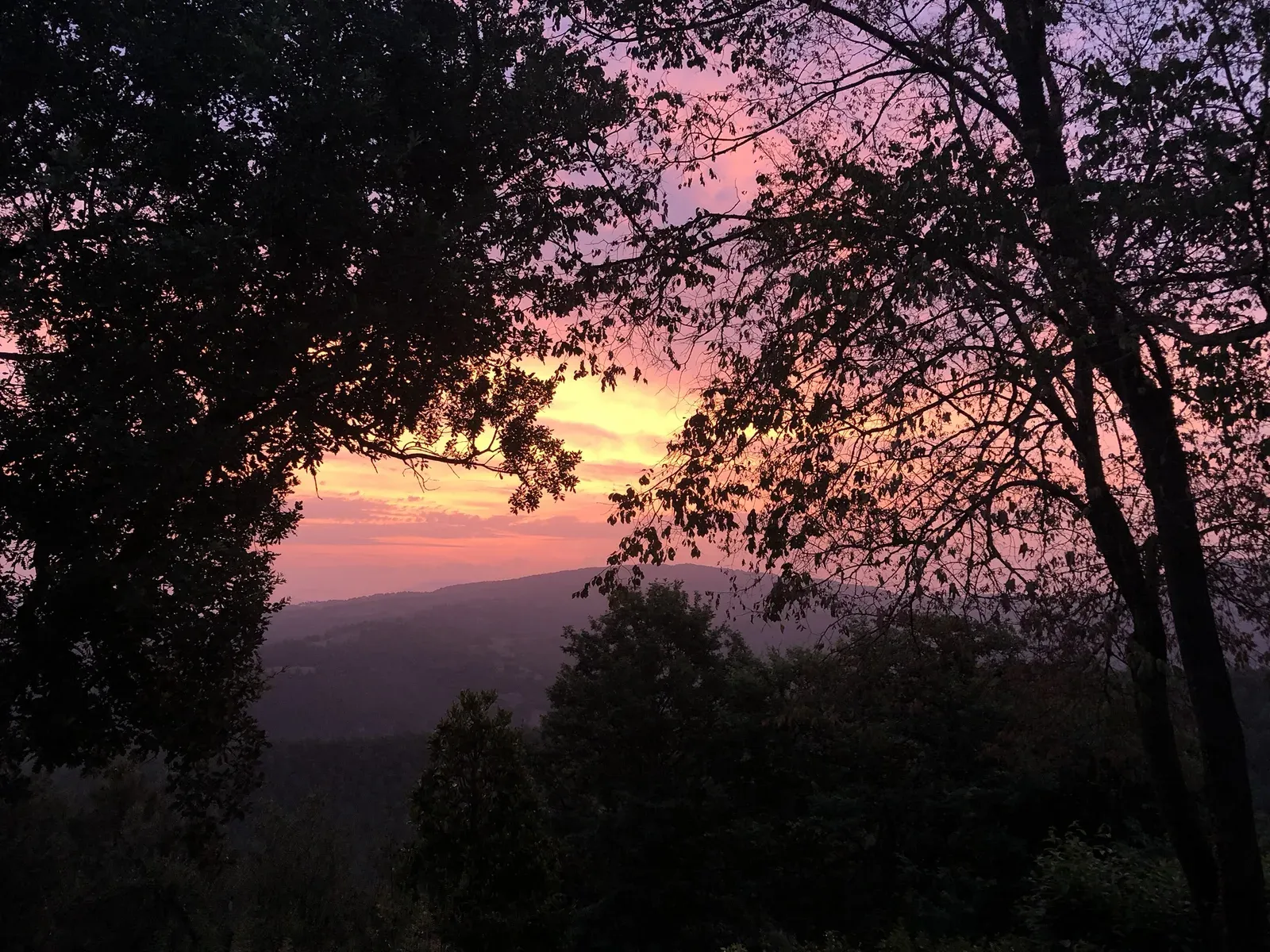
Our home among the olive trees and woods up the side of an isolated hill has the feeling of being on top of the world. At an elevation around 450 to 500 metres above sea level, our location at Sambucaro is atmospheric. The Niccone valley connects two bodies of water, the upper Tiber River with Lago Trasimeno. This means that mist is frequently present, especially when the nights are colder. Fortunately our house mostly sits above this cloud, which then appears like a magnificent white sea lapping along the edges of the valley slopes.
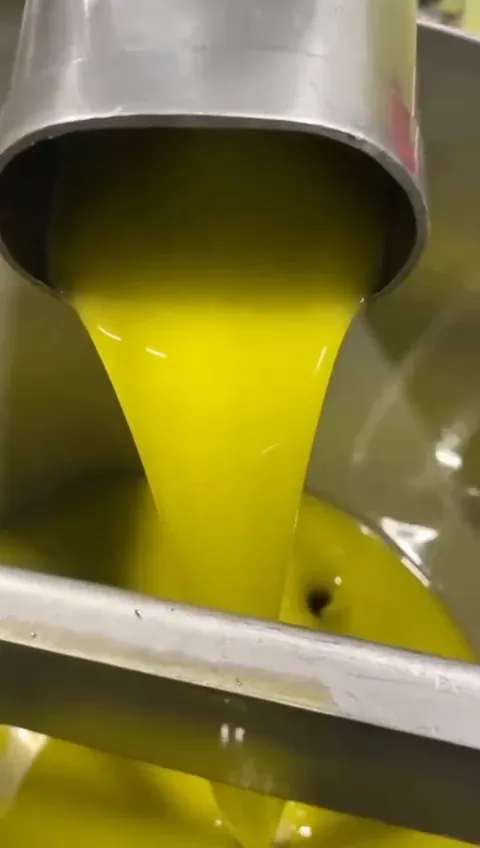
Our olive oil is made from the first pressing of olives grown only on our estate. The whole process of cultivating the olives and milling the oil is done without resort to chemicals and without the use of heat or other intervention.
Our olives
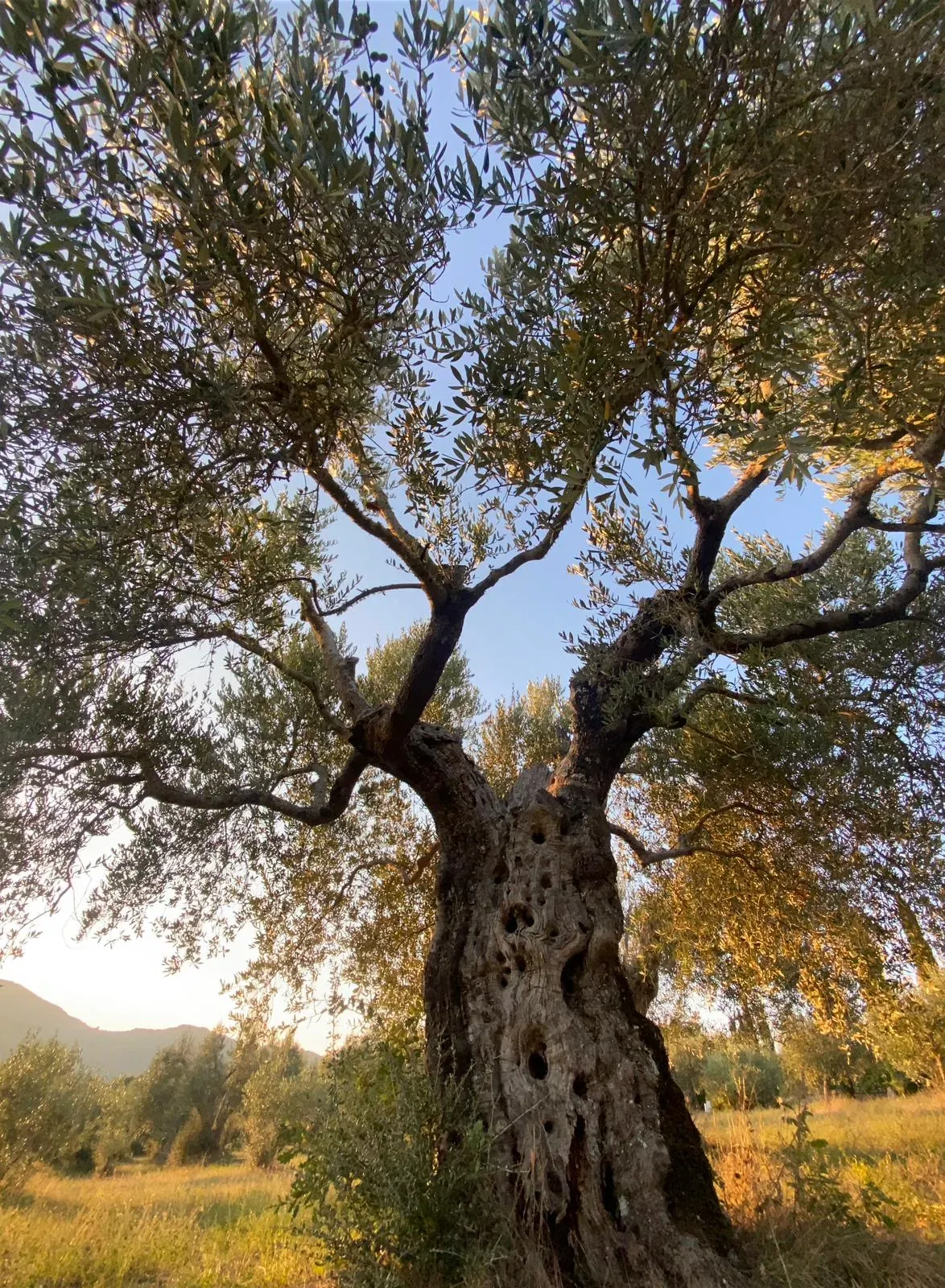
We produce a single-estate extra-virgin organic olive oil that is made from a blend of varietals commonly found in Umbria and typical for the region: Leccino, Frantoio, Moraiolo. We also use as pollinators the Maurino and Pendolino varieties. All our olives have their origin around this region or central Italy. These olive types have adapted to the local climate and contribute unique, distinctive flavours to our olive oil, reflecting the valley and our olive grove’s terroir. The balance achieved in our blend of olives offers a harmonious and well-rounded flavour profile.
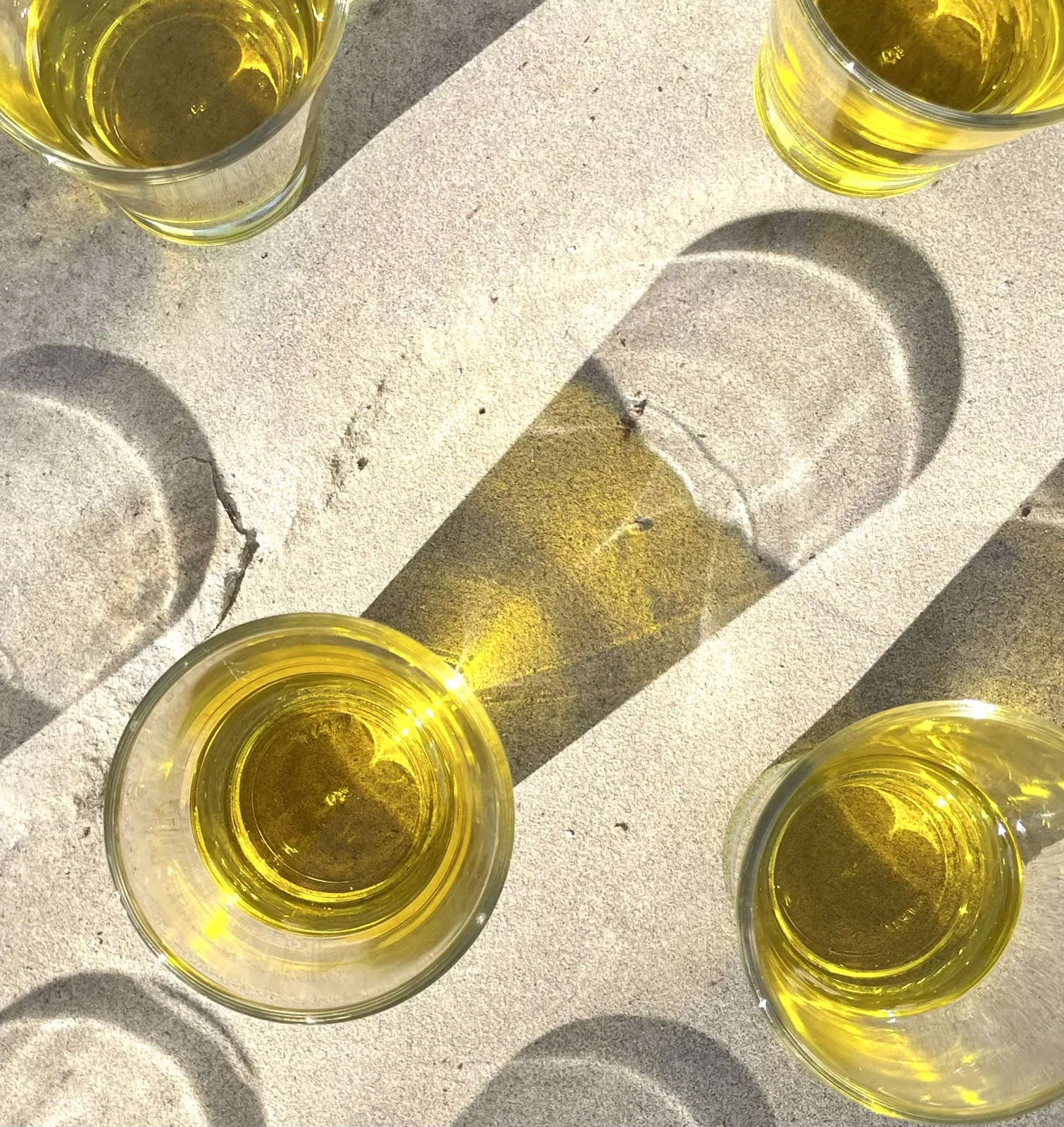
golden-yellow, shades of green
Quite rustic in nature. It is not overly aromatic, has a slight bitter aftertaste, and a hint of spiciness.
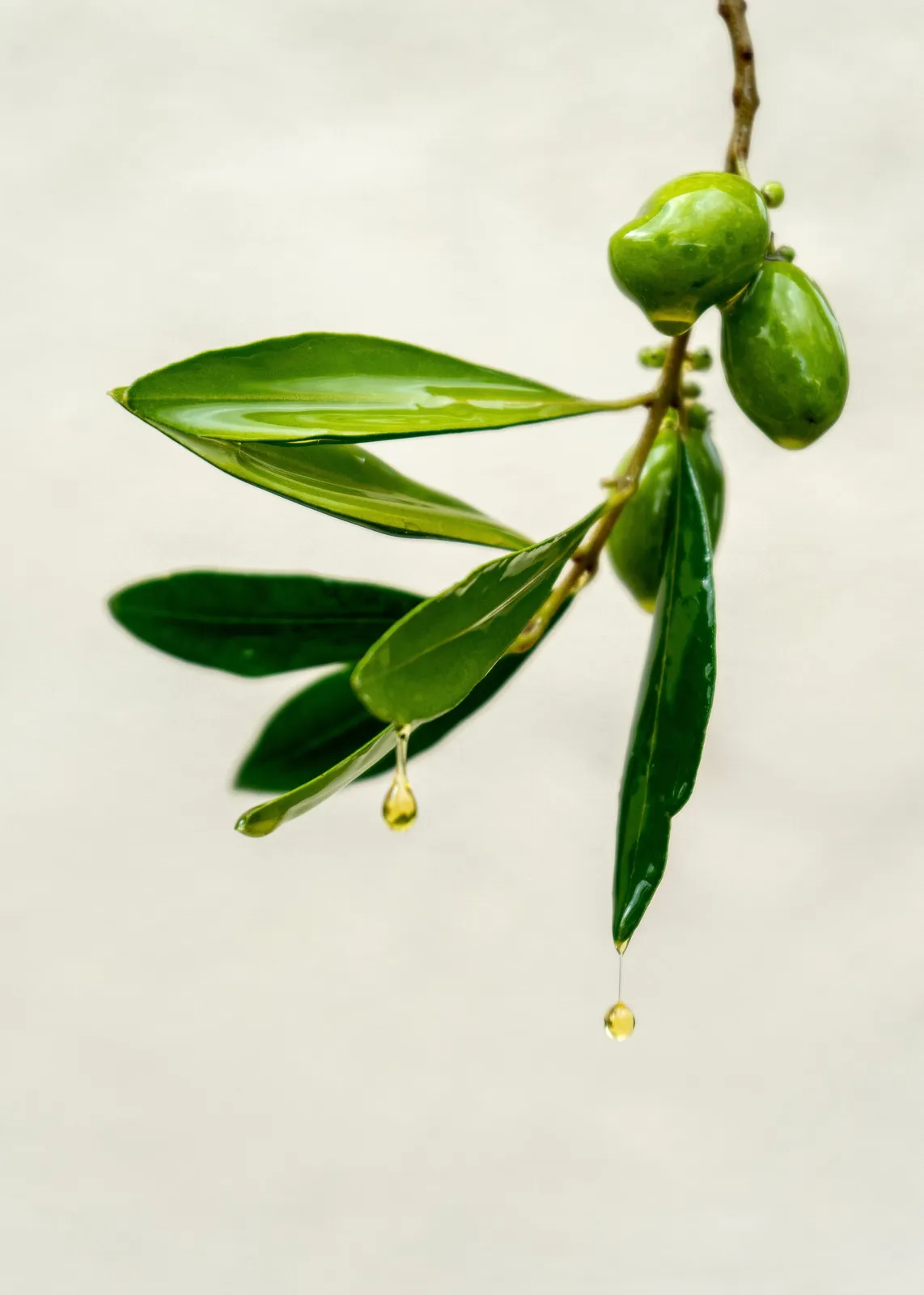
intense green
A fresh oil, quite sweet and fruity with hints of fresh grass, artichokes, and almonds. It has a lightly piccante character on the back of the throat and gives the oil a certain velvet creaminess.
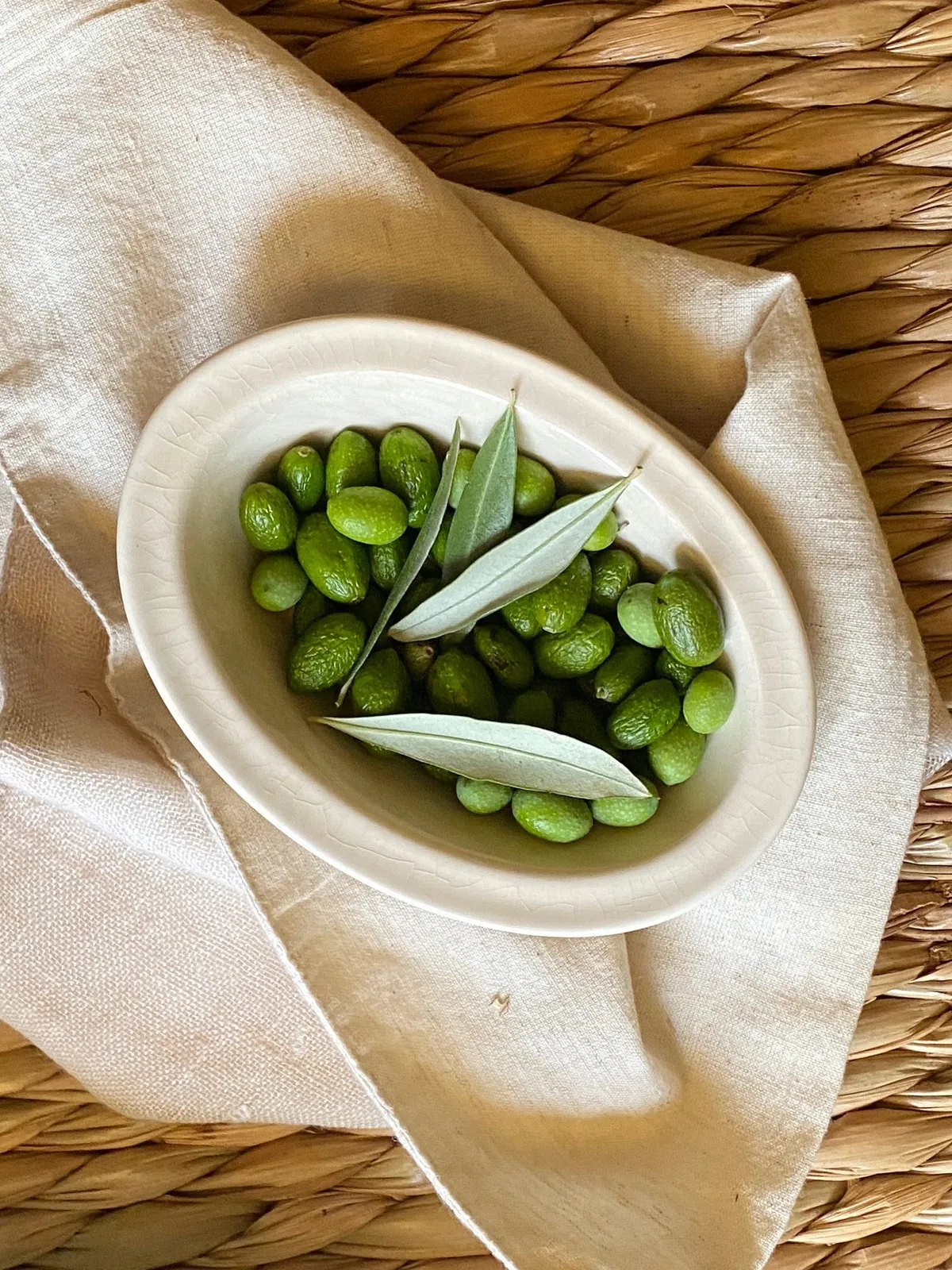
green-gold, medium-bodied
On the nose, hazelnut and almond, with notes of both artichoke and aromatic herbs. A pleasant balanced mix of bitter and piquant notes.
Overall we might say that our oil is characterised by its robust flavour and peppery zing, a broad sweetness wrapped inside a slightly amaro edge. The oil may have herbaceous and grassy notes, along with a hint of artichoke, and a certain nuttiness.
The oil these olives produce has excellent organoleptic characteristics. It appeals particularly to those who appreciate a taste that is pure, natural and reflects the uniqueness of territory, time, and the seasons.
The oil also has important benefits for health and lifestyle, including a high content of polyphenols with powerful antioxidant properties and anti-inflammatory benefits, as well as being a source of vegetable squalene, which helps to moisturise the skin and maintain the complexion.
Each harvest has a subtly different mix of olives, from different areas of the grove, conducted under different weather conditions. This results in a constantly changing and always delightful flavour, and makes each year a vintage that is unique.
The harvest
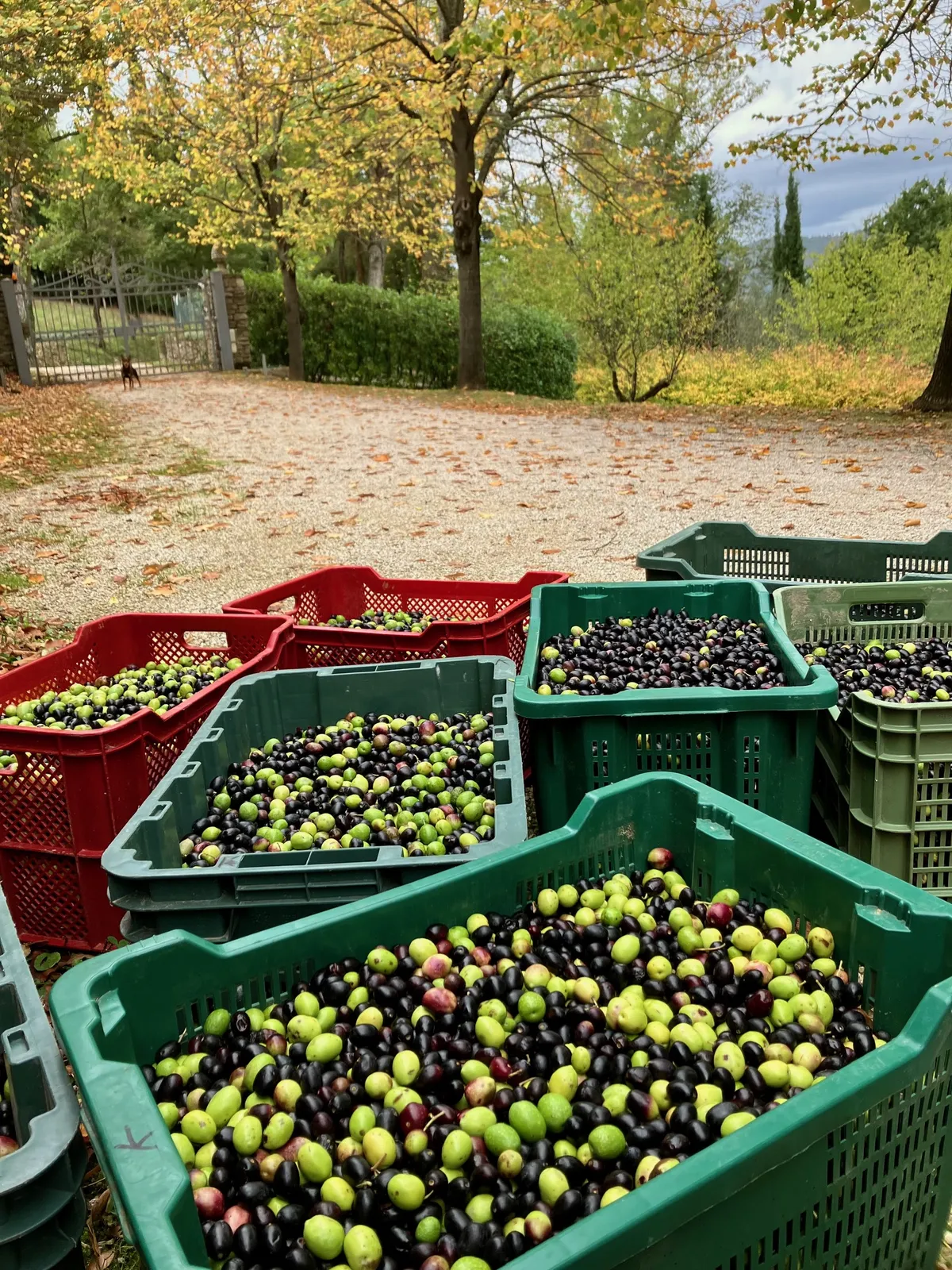
At harvest time we enjoy collecting the olives from our trees on the slopes of the hill overlooking the Niccone valley as the mist rises and the sun dries the fields. Often the weather is mild and the temperatures stay pleasant during the day if slightly colder at night. The harvest is entirely hand-picked without use of machines or mechanical aids.
We place a strong emphasis on traditional, sustainable and environmentally responsible farming practices. Our relatively small scale of production allows us to focus on quality over quantity. We avoid pesticides and fertilisers. We 100% hand pick our olives. We don’t use branch shakers or tree shakers, which ensures our olive groves remain healthy and live long. We practise a pruning that prioritises the tree and its vitality rather than the olive-picker and the desire for easy harvesting.
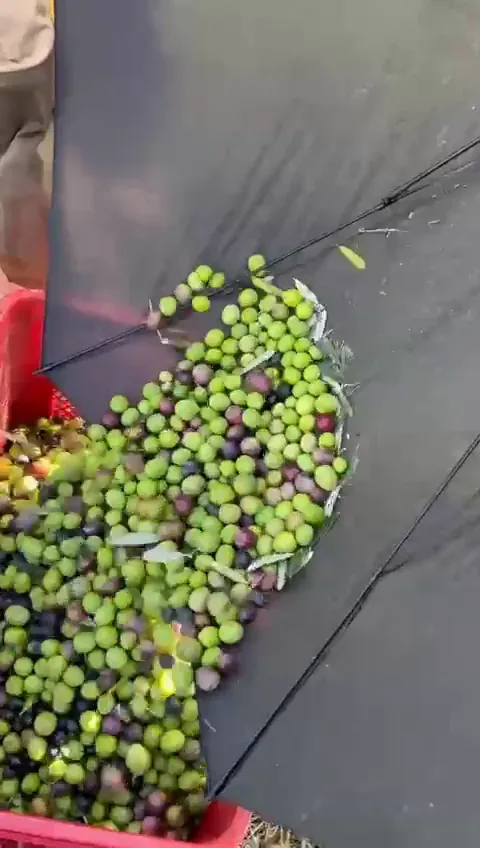
We employ a harvesting method that Catia, our neighbour, favours: a slightly unusual, yet effective practice of hanging umbrellas in the trees to catch olives as they are picked by hand. This method is a superb answer to collecting olives on a steep slope. We can avoid not only the use of machines, but also the use of nets, which are time and labour intensive and which don’t truly stop the olives from rolling away. We love the playful, slightly offbeat things in life and harvesting olives into upside-down umbrellas really appeals to our sense of fun and delight.
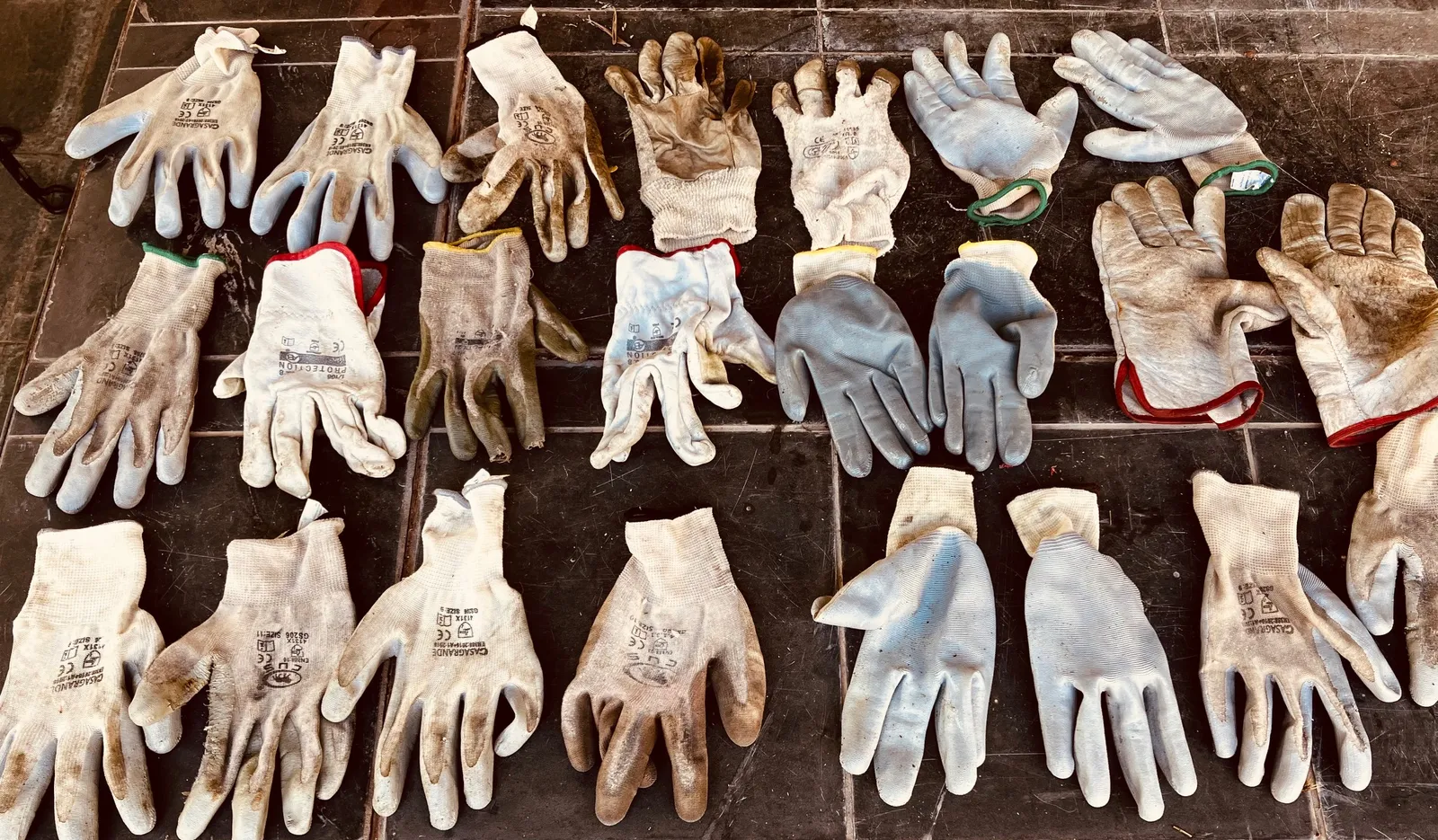
Hand-picking our olives results in less bruising and a higher quality of fruit. It also facilitates a wonderful atmosphere around the tree. As we hand-pick the fruit we chat; for old acquaintances renewing our bonds, and for new acquaintances getting to know one another on a deeper level.
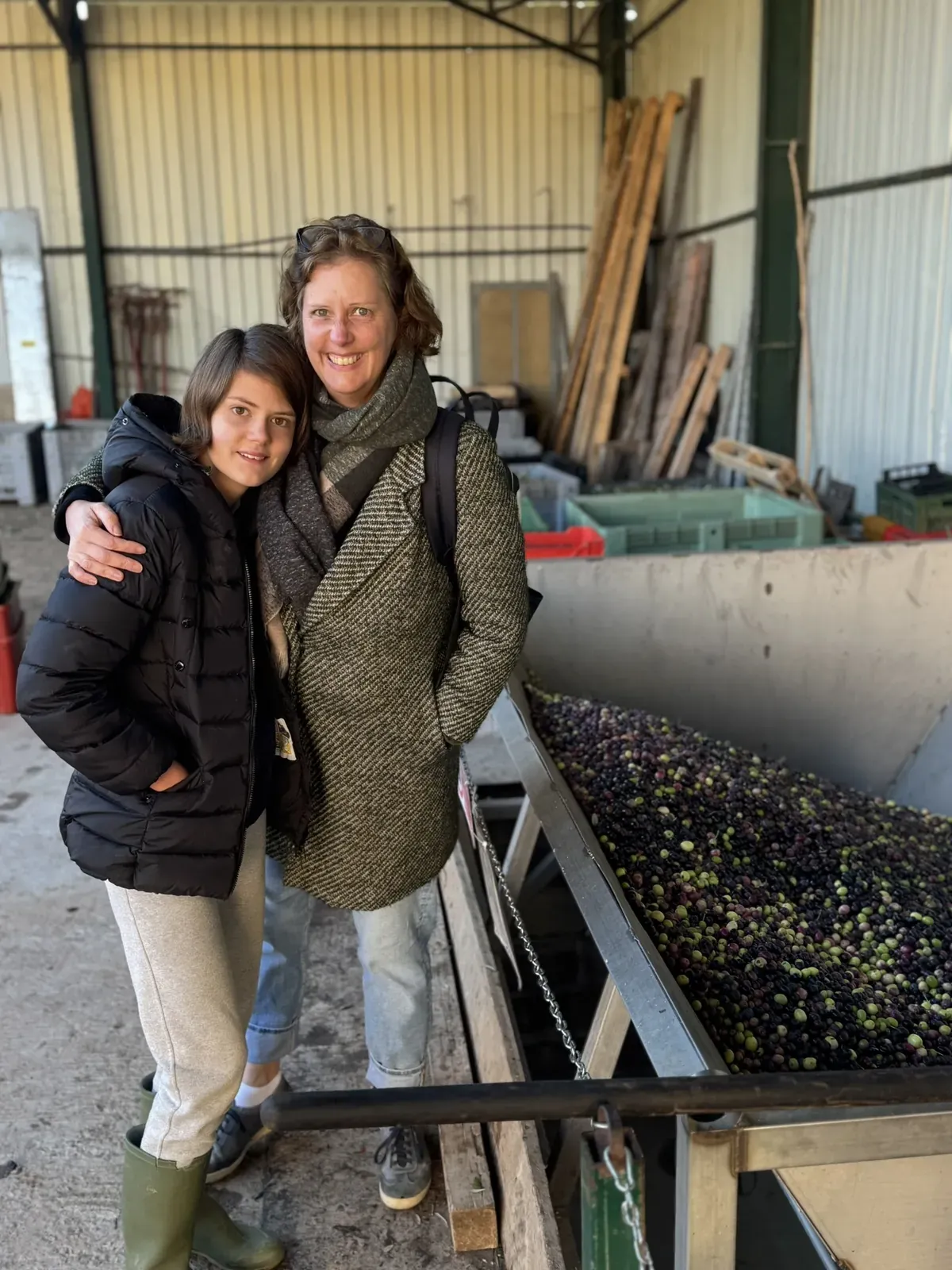
All this means that our olive harvest is a fairly relaxed operation. Indeed, we are not a commercial business. We have up to 3,000 trees, which in a good year at 20–25 kg of olives (roughly one crate) per tree comes to around 70 tons. At a 13–17% return, this gives us about 10 tons of olive oil. However, we tend to pick less than 1 ton a week of olives at harvest time, not least since the weather can be changeable, and these olives are used simply for our purposes over the following year. Some olives are macerated for eating and others dried for cooking.
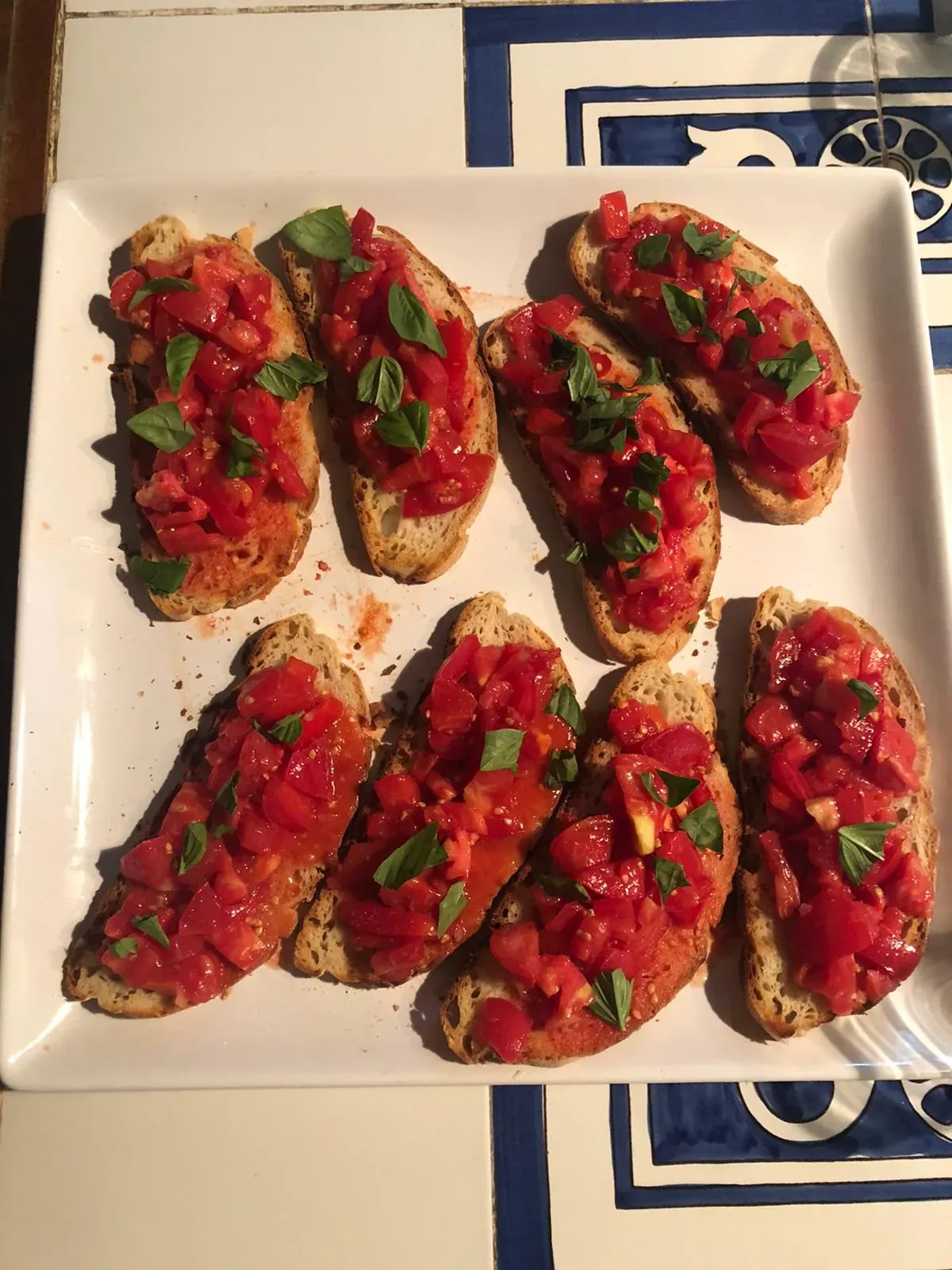
The olive harvest is a highly anticipated, much-loved occasion each year. And as the results come in, early one morning after milling the first product from our olive harvest we pour oil on some warm toasted bread, crack some salt over it, and enjoy the immediate results of our combined labours: a vibrant green-gold, medium-bodied, organic olive oil, cold pressed, extra virgin, which although youthful and slightly piccante already shows hints of sweetness. The cold-pressing method helps preserve all the natural flavour and nutrients.
Catia gives a prayer of thanks over the shared bruschetta doused in the freshly pressed olive oil and salt… And together we relish the satisfaction of a successful harvest and give thanks to nature’s bounty. The simple act of pouring our own pure olive oil, straight from the mill, onto our freshly baked sourdough bread, the vibrant yellow-green against the white, is one of life’s great delights.
The seasons
Our climate is characterised by mild, wet winters, with occasional cold winds and snowfall in higher elevations, followed by warm, dry summers.
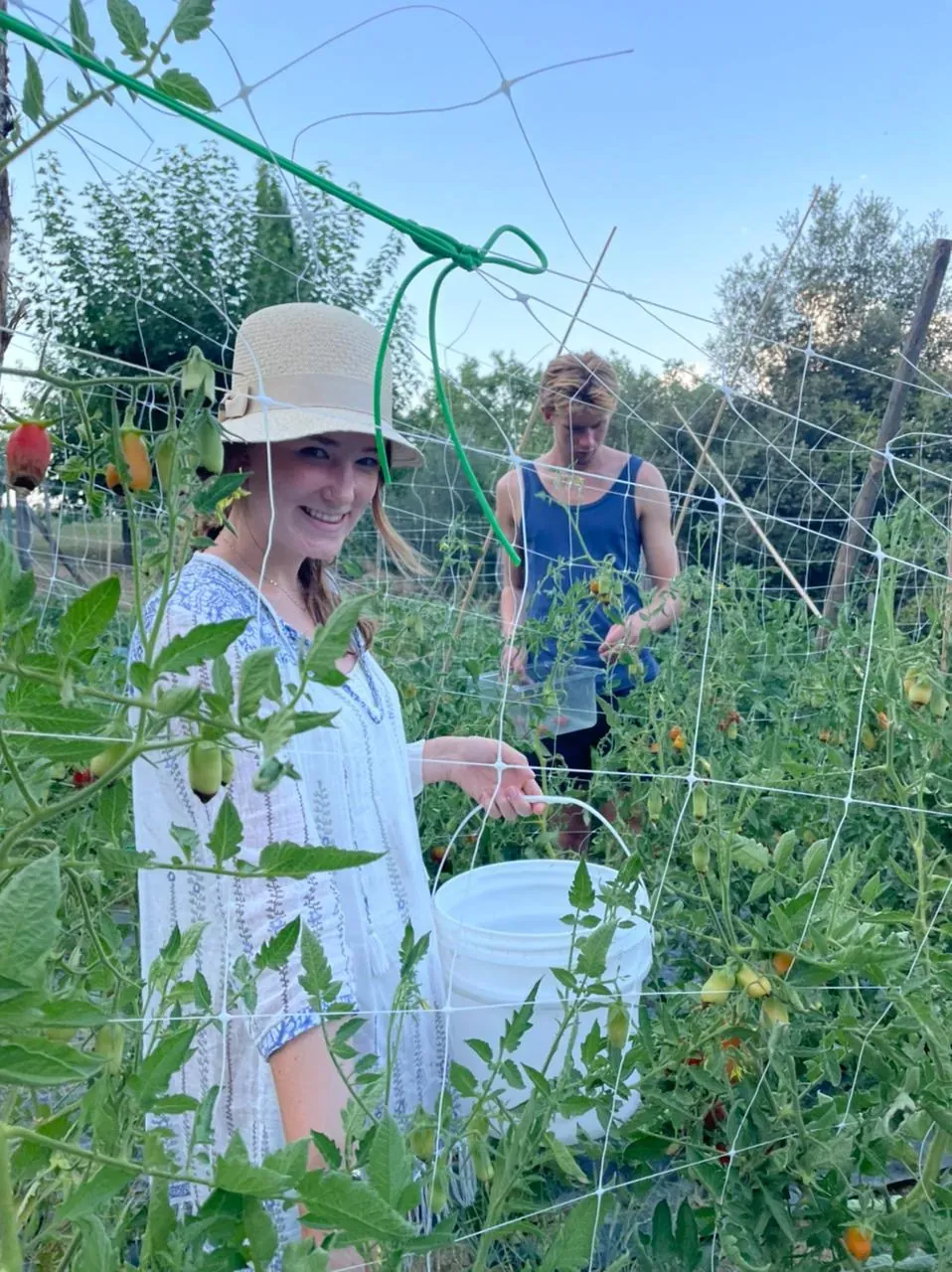
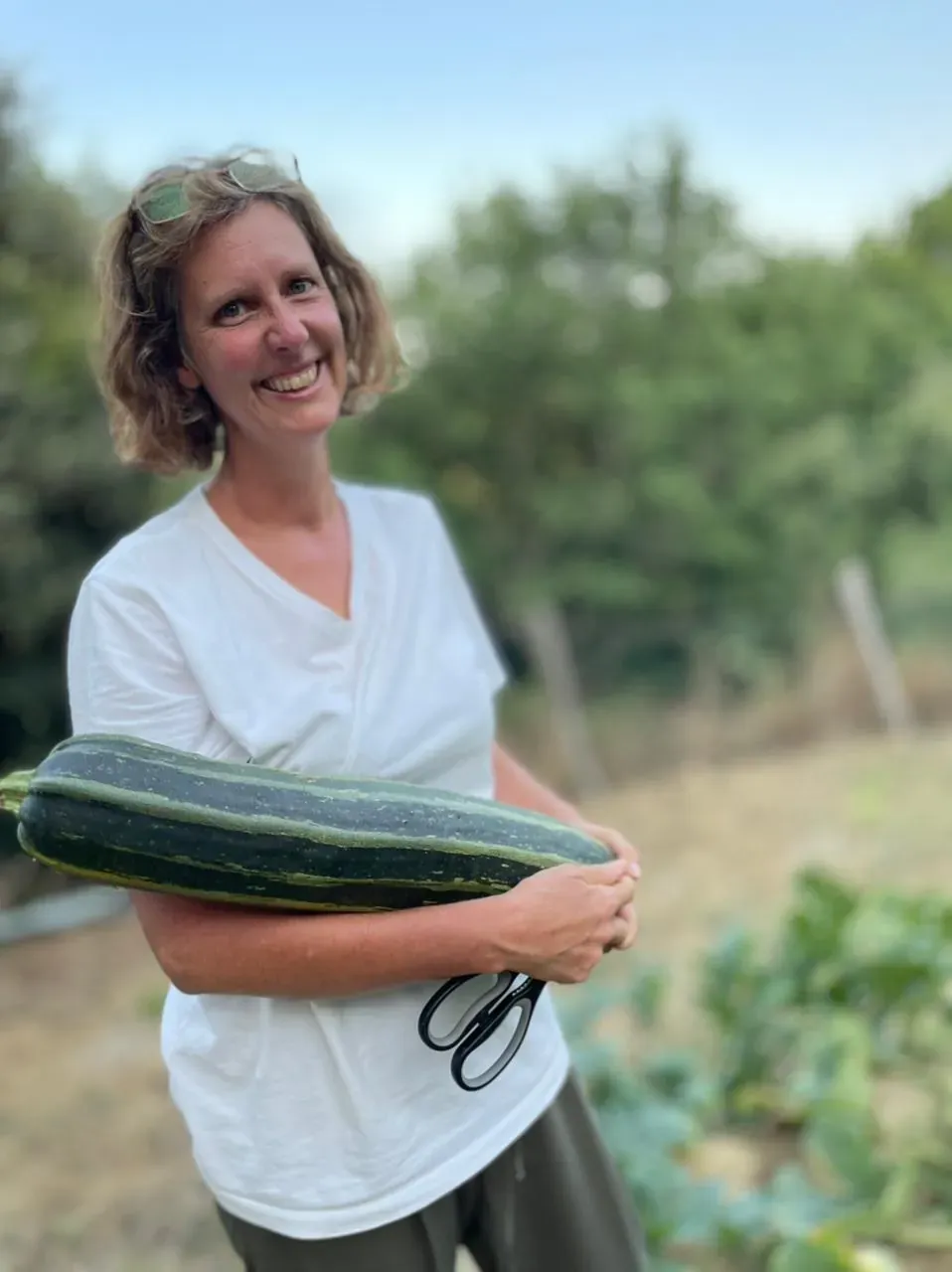
The kitchen garden, or orto, is full of fava beans, which you can eat raw in spring, ripe tomatoes, zucchini with their exquisite yellow flowers that tumble across the plate, peas, artichoke, various types of garlic, sweet cucumber, horseradish, bell peppers (capsicum), Swiss chard, kale, wild spinach, various types of onions, potatoes, and many salad varieties.
Later we get fennel, radish, turnip, eggplant (aubergine), little cauliflowers, some broccoli, squash, pumpkin, sweet cabbage. We grow many herbs (rosemary, sage, flat parsley, marjoram, basil, various types of mint, oregano, chives, thyme, and savory, which has a bold, pepper flavour) and these herbs fill our meals.
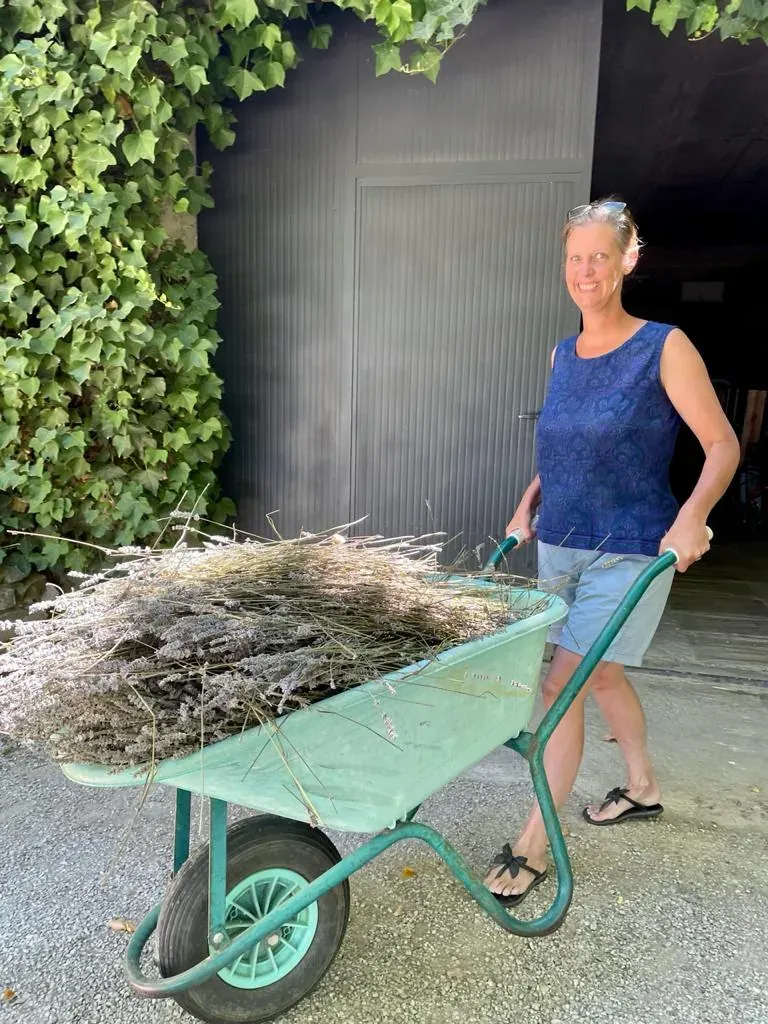
We enjoy fresh teas made from many of these same herbs; rosemary, sage, lemon verbena, lemon balm, Siberian sage, mint leaves from the garden, or wild mint which grows in the fields and creates a magnificent perfume that surrounds you when walking outside in the summer. At some point we will also use these herbs along with our lavender and other medicinal plants for our outdoor bath; somewhat along the lines that Suor Bernardina described in her now-forgotten classic, Guarire con le erbe.
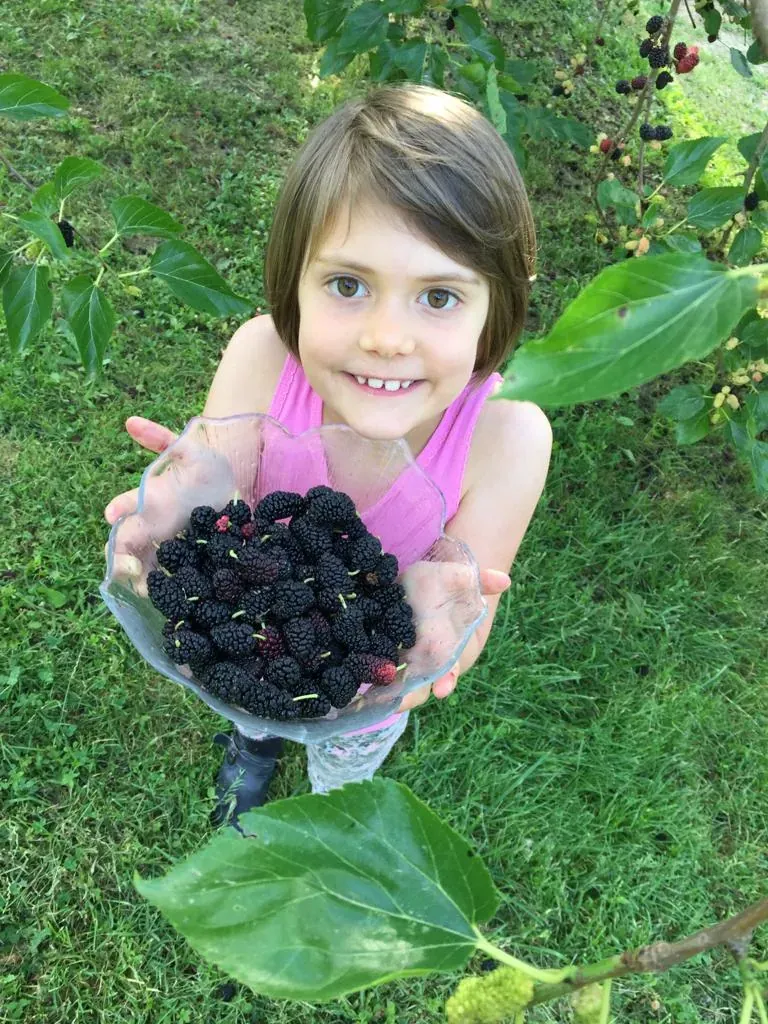
In spring small wild strawberries and thin wild asparagus grow near the edges of the fields and roads. We have wild cherry and wild fig trees as well as more domesticated mulberry, plum, apple, and lemon trees. A wide variety of berry bushes surround our vegetable patch. In summer there is also watermelon and rock melon. Wild blackberries are found in the hills. In autumn, when the trees become a mass of bright colours (reds, oranges and yellows), we enjoy rich persimmon and juicy pomegranate.
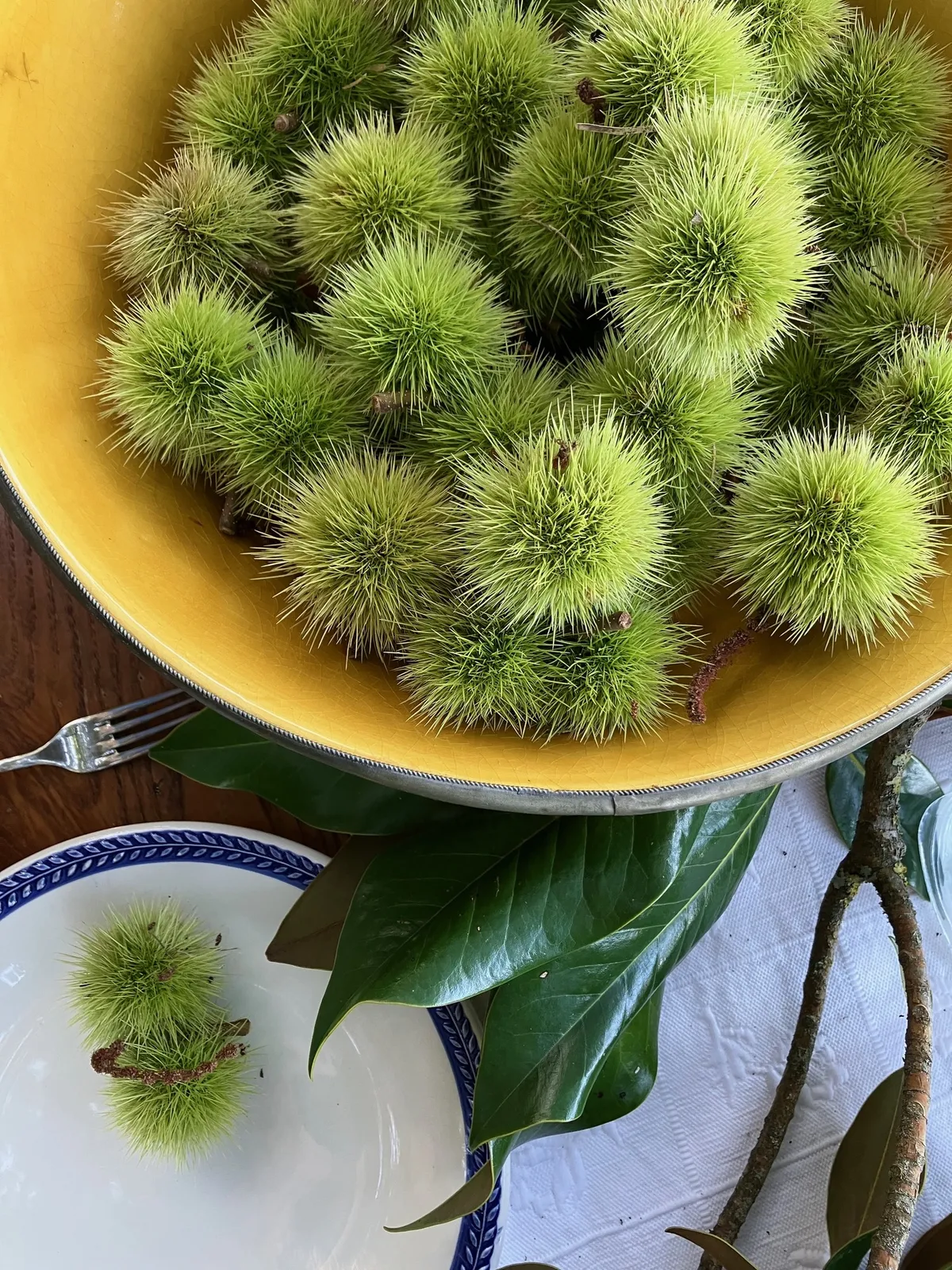
In autumn we also collect chestnuts, which currently we turn into chocolate chestnut cakes (too many!) or other desserts. There are also pine nuts, good for pesto as well as desserts, but, like too many things here, we have yet to properly master them.
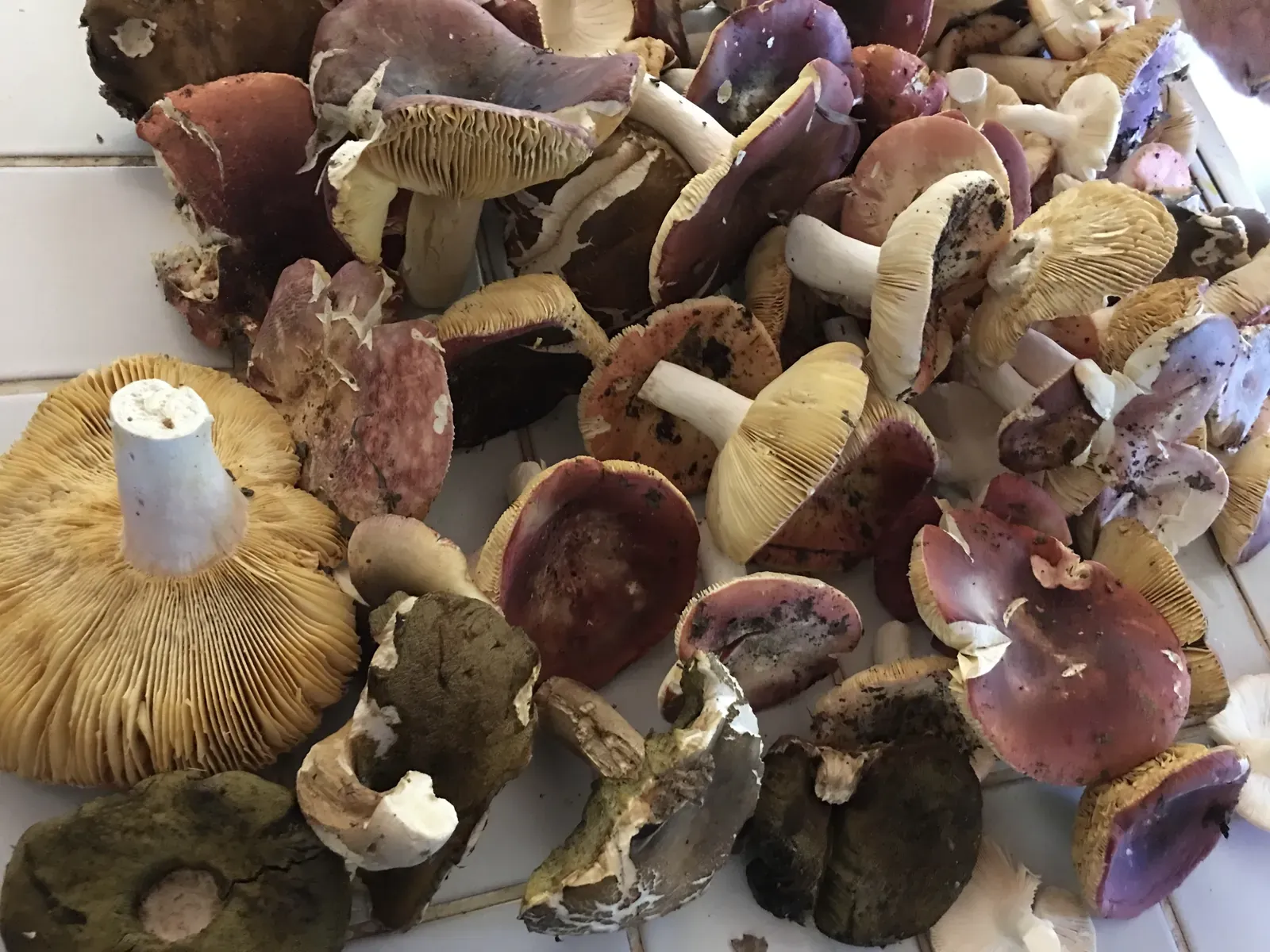
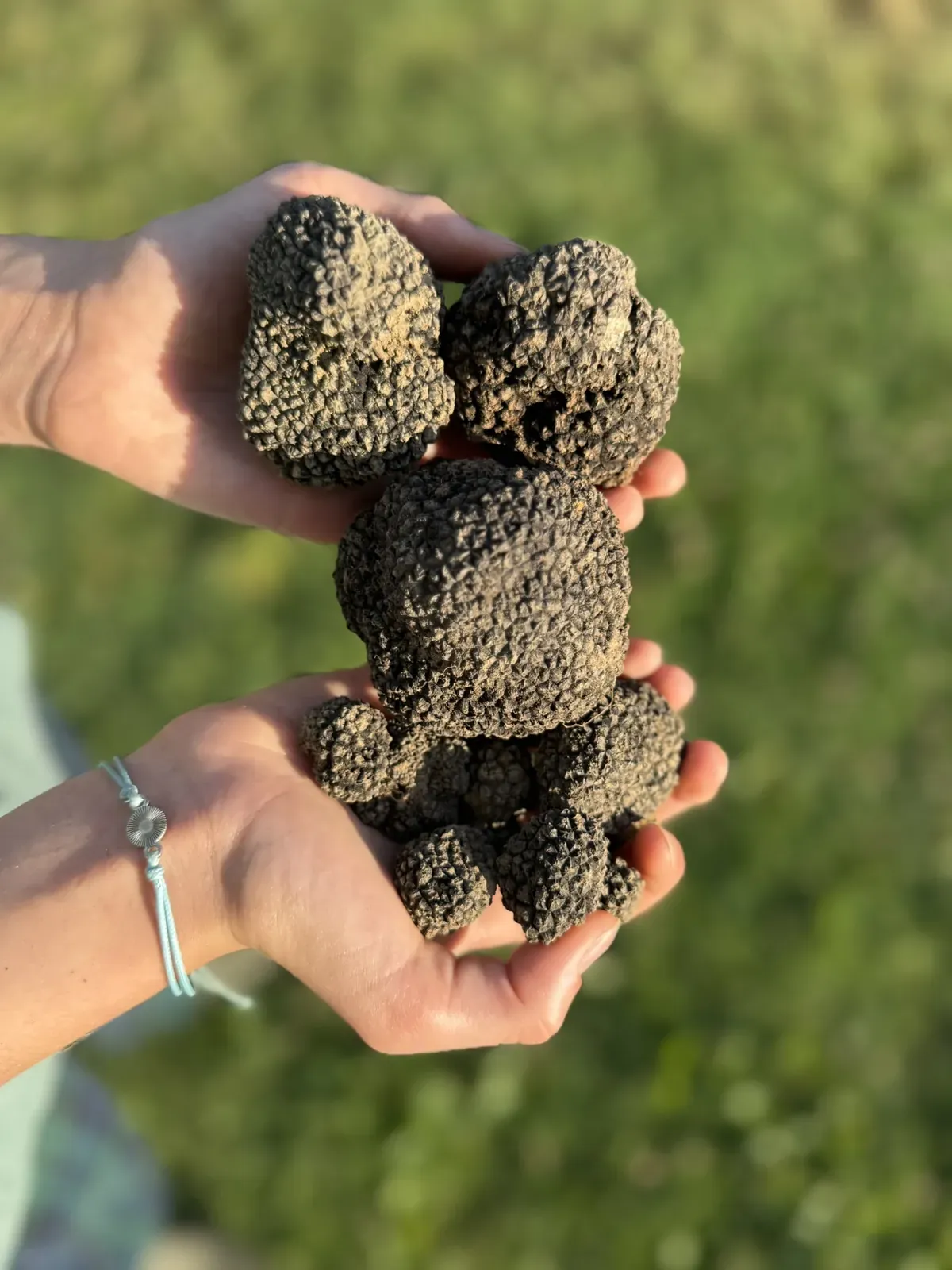
At the right time, at various points in the year, we benefit from wonderful mushrooms, which we eat grilled or fried on their own or in grander dishes with pasta or meat. If the dog is lucky enough to find a truffle (once we had one the size of a baseball) then we make truffle pasta. Sometimes we do get a lot of truffles when the weather conditions are favourable.
We have used the elderflower in our garden here to make syrups, cake, and tempura; the cherries to make crumble, compôte, and liqueur. We have combined the two, elderflower and wild red cherries, into a wonderful, fresh breakfast jam for bread or pastries. The same happens for mulberries, if they are not all eaten immediately, and the other fruit we have when late frosts don’t get to them… A particularly good combination is apricot jam made with rosemary. We enjoy figs late summer which we eat with cheese, bread, and our vegetables on picnics out in the fields.
We are keen to do more in terms of planting, especially of historical varietals, around which we aim to write some text focused on the great value and use of diversity in the home garden. We have already done a little work on past use of raw ingredients in Italy. It is clear after working through old texts that some of the particular flavours, older combinations and techniques for cooking natural ingredients, have become forgotten over time…
We are keen to explore products such as oils, preserves, pickles, dried fruit, dried tomatoes and olives, honey, and natural beverages, as well as soaps and natural colour dyes. We have made a tiny start in this direction, for example in terms of bottling produce, making relish (for example with zucchini), drying our olives, and making liqueurs.
The art hub
Our goal is to excite the senses, embolden the spirit, and inspire the imagination. Essentially we are in search of an idea about what nature, art, and life can be together in the modern world. We are keen to combine art with our farming; not just in terms of outdoor sculpture or environmental artwork but as a way of life that not only reflects our combined activities and interests but also contributes to our outcomes in a meaningful way.
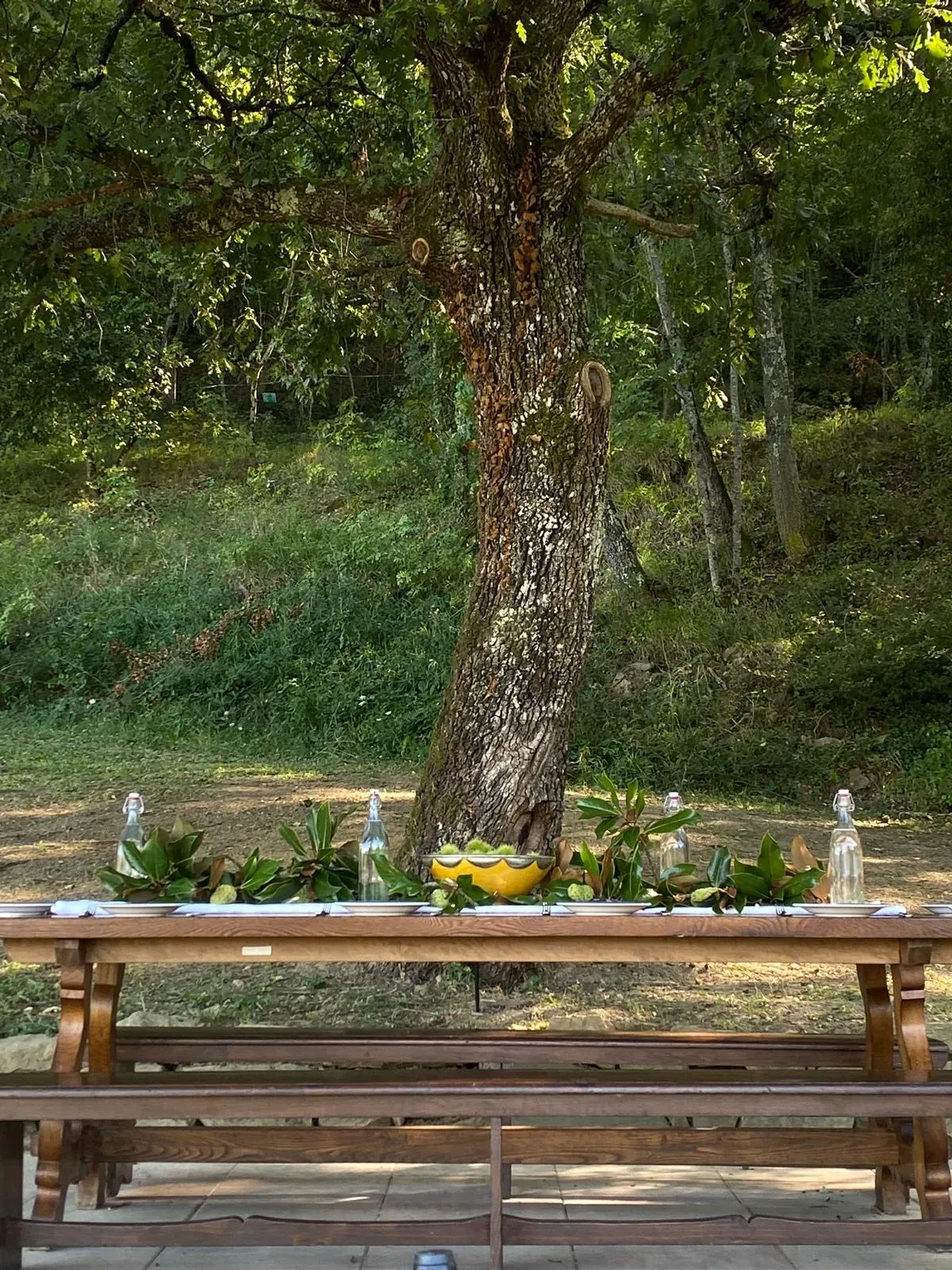
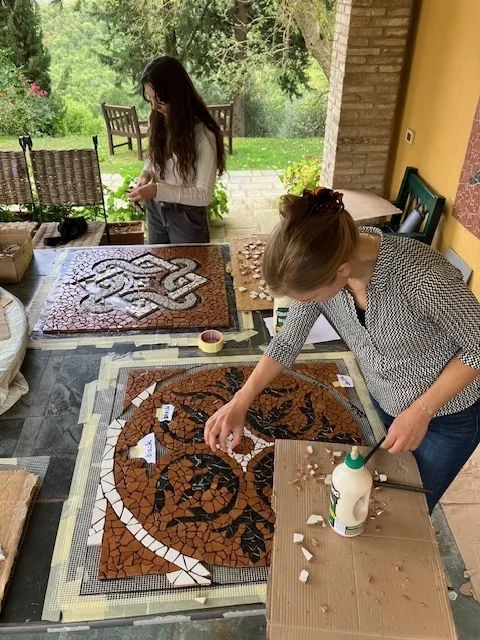
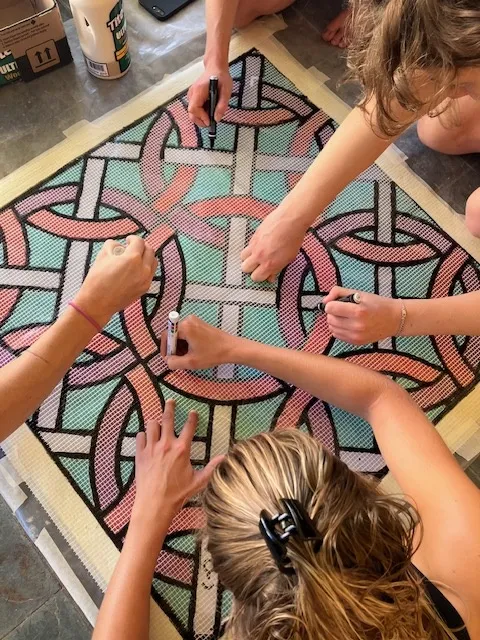
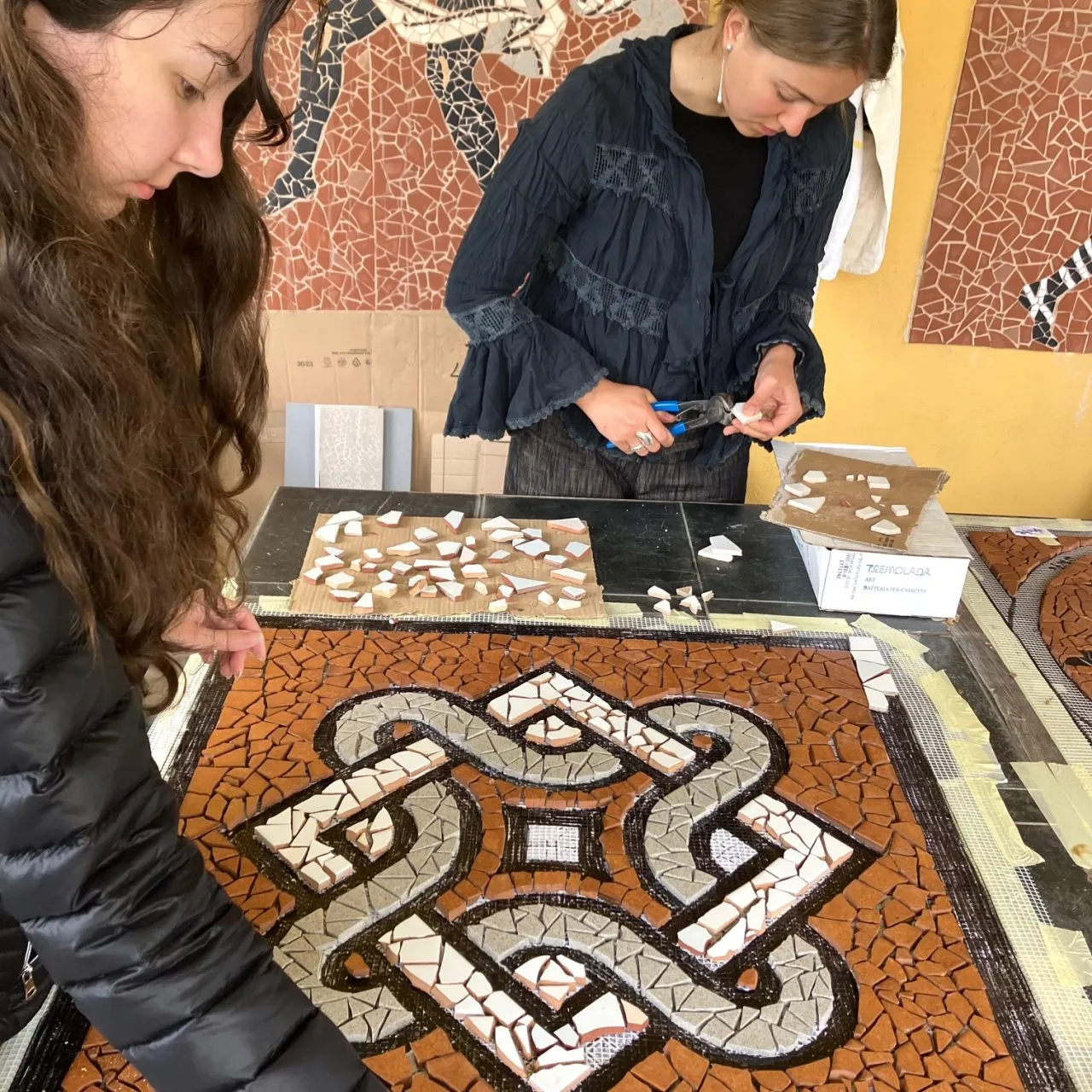
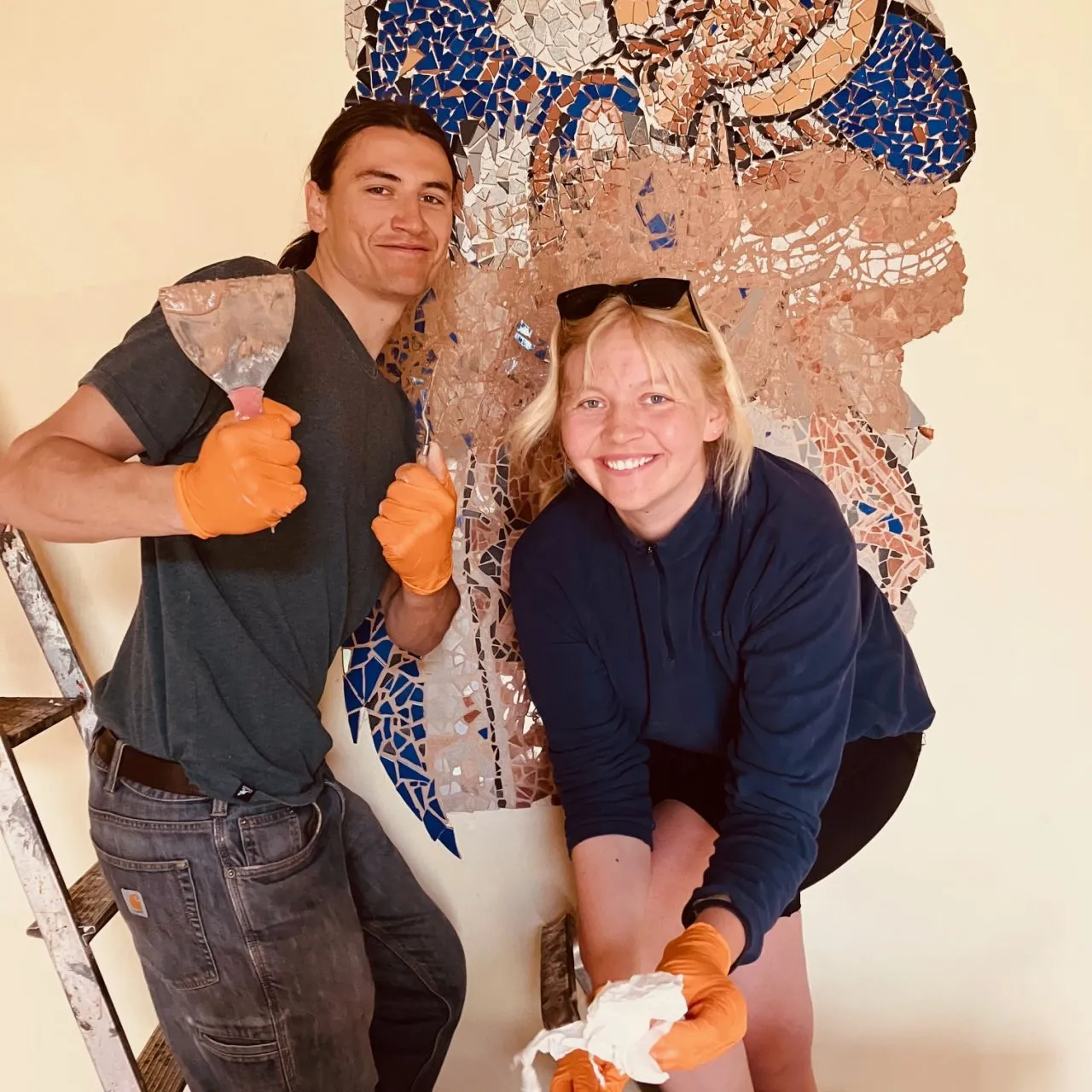
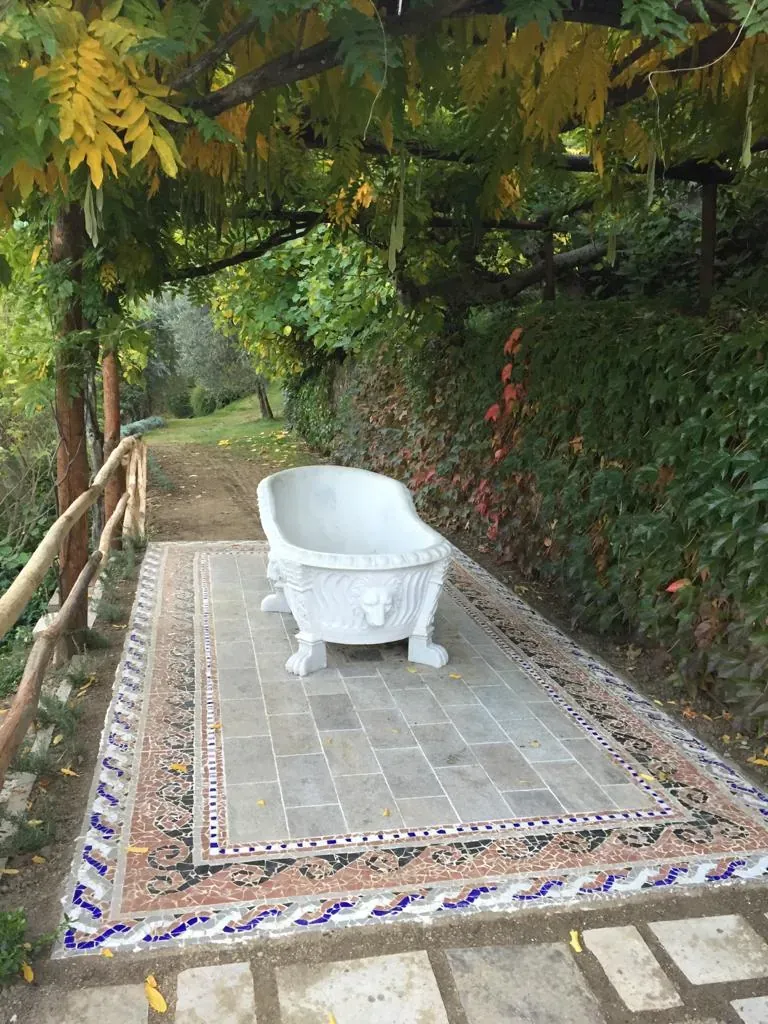
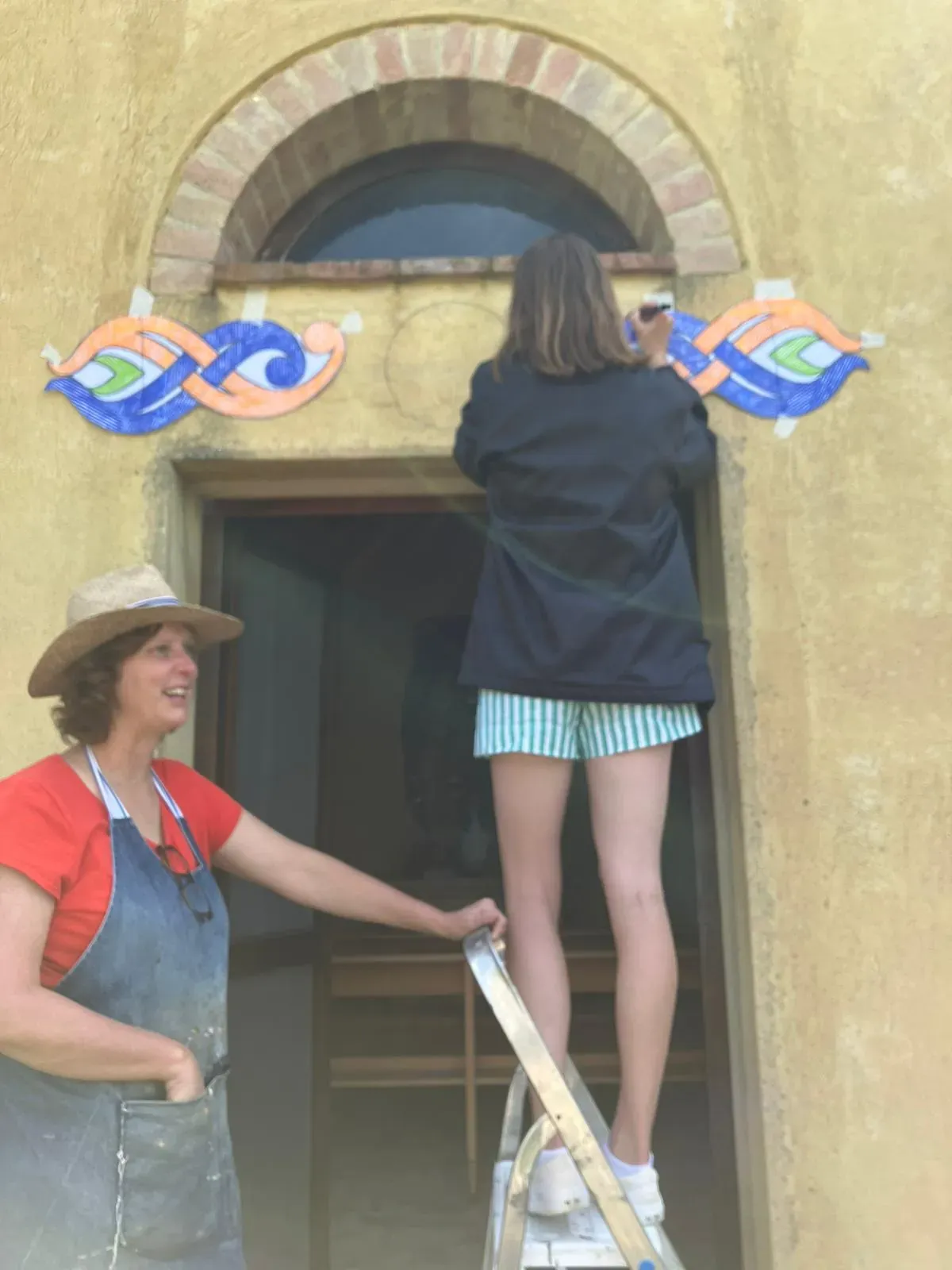
At the farm Trina has created, with the help of guests, a number of mosaics for the local chapel and for the house. She also put together a mosaic floor to put under the outdoor bath and we intend to do another mosaic floor for the picnic table which is situated under a great, old oak tree in the olive fields overlooking the valley. As inspiration, Trina has taken the Villa Romana del Casale near Piazza Armerina in Sicily.
At some point, Trina plans to create also a more purposeful ‘artist’s garden’ which mixes landscape, planting, and artwork and which will encompass a small outdoor shrine, some traditional garden walls, and a minimalist chapel for the woods.
Artwork
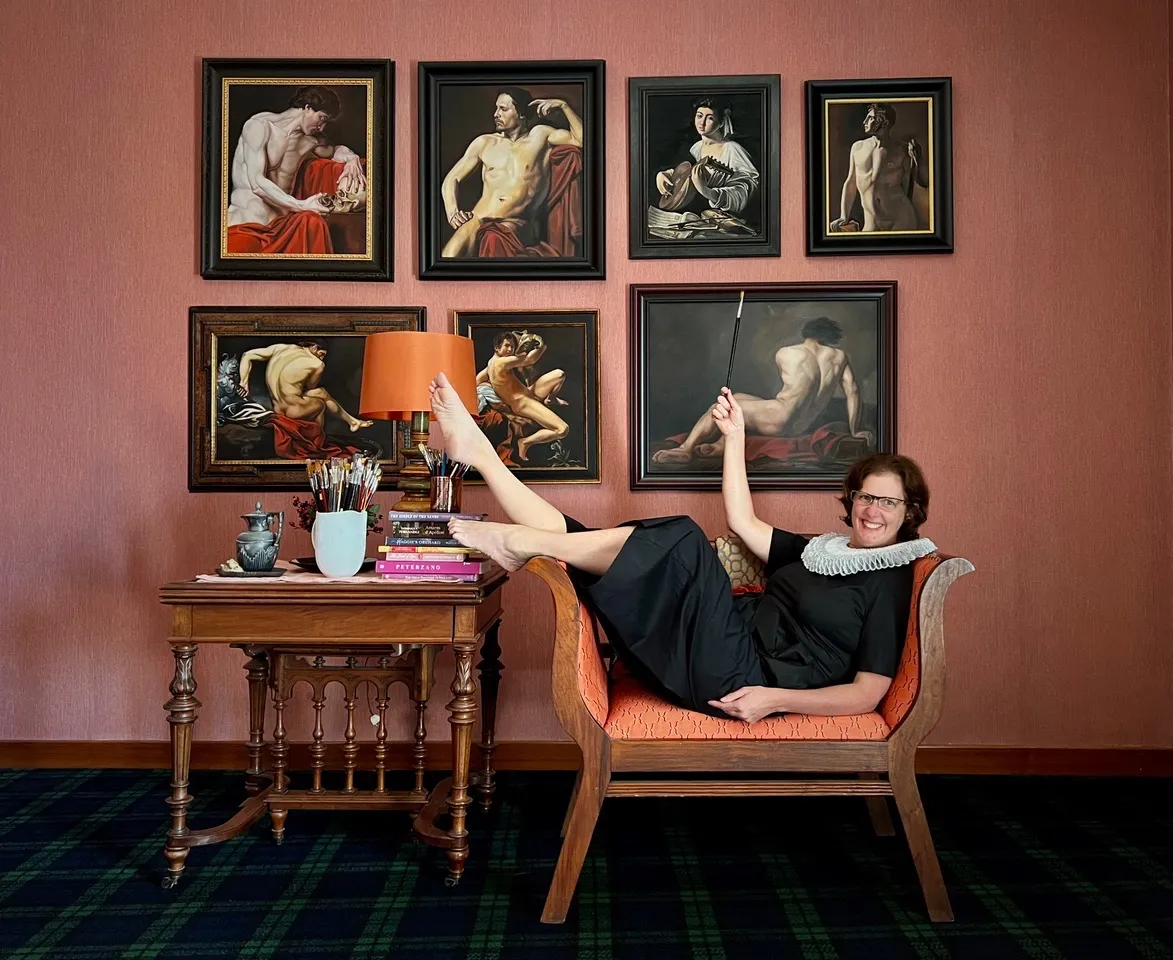
Trina does a lot of art. She works now mostly on traditional oil painting at a professional level but started out and made her name in contemporary art.
Trina originally exhibited as an artist of contemporary work, both on a solo and joint basis, and had work accepted into the National Gallery of Australia and for exhibition at the National Museum of Women in the Arts in Washington, DC. In earlier years she won prizes for outstanding achievement, drawing, and artistic distinction, and was runner-up for the Mandorla Art Award in 1996. Much of her initial work was structured around found or used objects. Trina also won a scholarship for a short residency with Arthur Boyd in Australia. Later she worked on the ‘Party Animals’ public installation art project, again in DC.
These days Trina mostly does portraits as well as old master copies and mash-ups. She often has fun on paintings and photographic portraits of the family whether in a classical or stylised fashion. Away from such work, Trina also does still lifes and Italian landscapes, and she has pursued her artistic visions and projects on site in America, Australia, China, Ireland, Italy, Japan and Scotland.
Trina has an art studio and basic photographic studio in Perugia. Using these studios, she has undertaken art-related commissions for a geographically dispersed mix of clients, from America, Australia, Bahrain, Belgium, Chile, China, Egypt, England, France, Hong Kong, Ireland, Italy, Japan, Mexico, Russia, Scotland, and Singapore. These commissions include portraits, landscapes, still lifes, professional and modelling shoots, trompe l’oeil, murals and mosaics. In what’s left of her time, Trina teaches painting on a private basis.
As part of her training, Trina has copied a substantial number of Caravaggio, baroque, and other realist or old-master artworks from the period 1500–1900. You can see her work at trinaohara.com and on Instagram at @trinaoharapainter.
Our passions
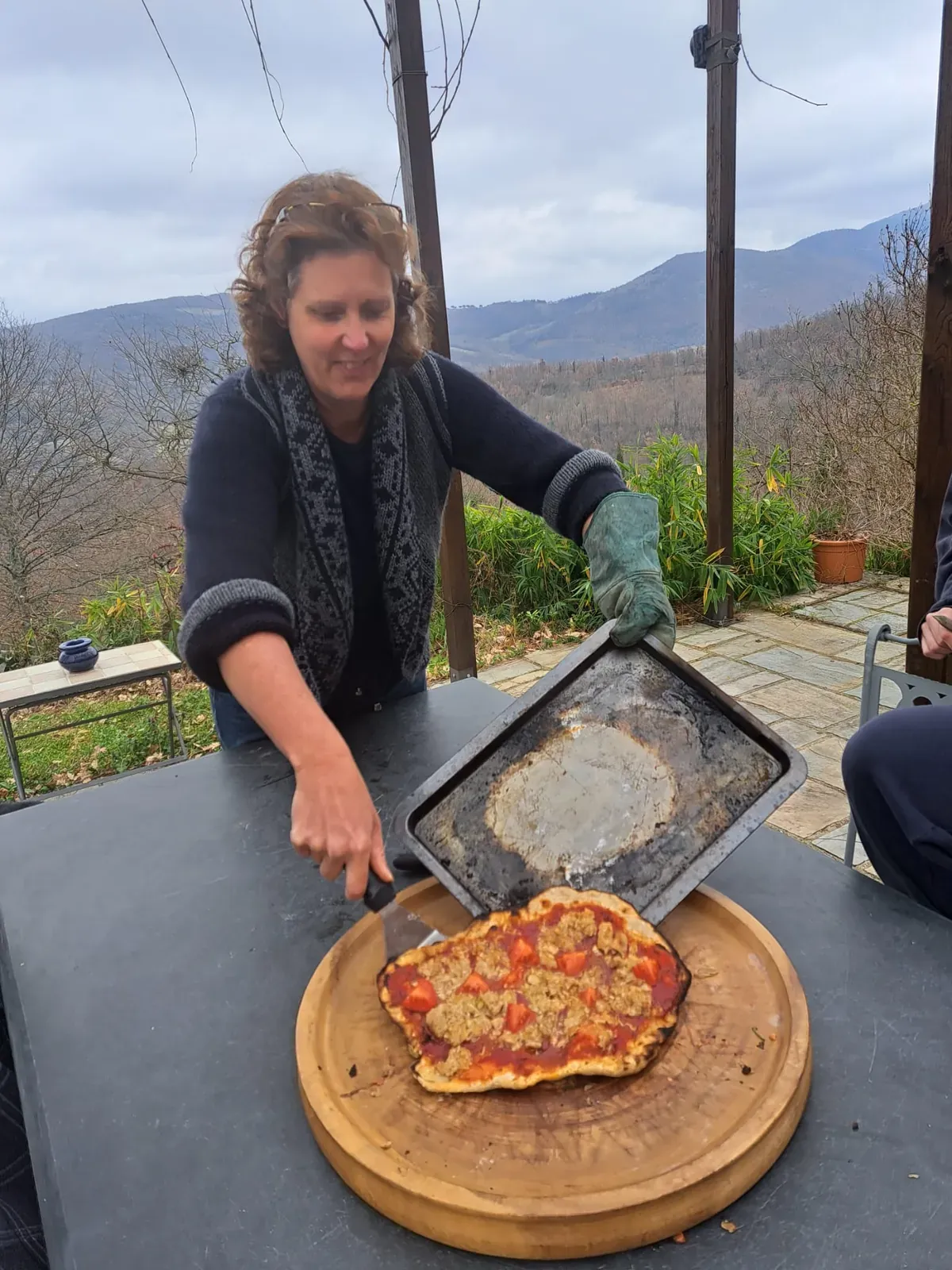
Away from farming and art, the family’s hobbies include ballroom and Latin dancing, found art and fashion, traditional Japanese taiko drumming, and cooking. Trina and Samuel joined an intensive ballroom dance camp in America in 2010 and participated in the Tokara Wadaiko Bootcamp in Nagano, Japan, conducted under the guidance of Art Lee, who was an all-Japan winner of the Solo Odaiko competition. When the occasion arises, Trina also likes to upholster and repurpose old furniture.
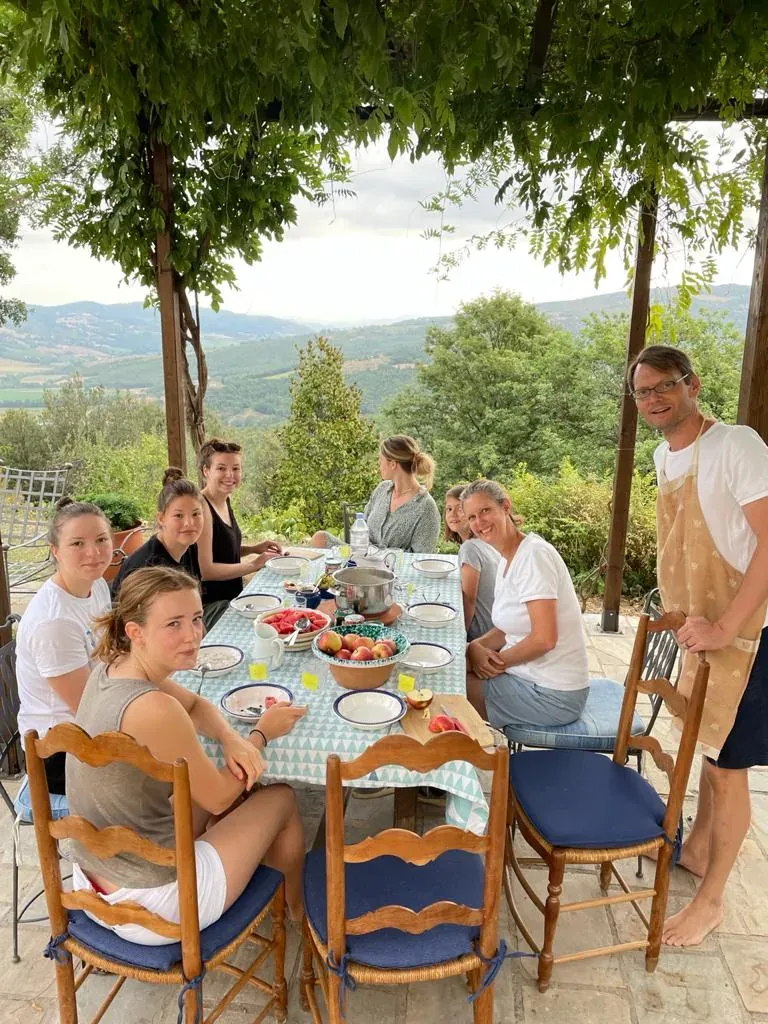
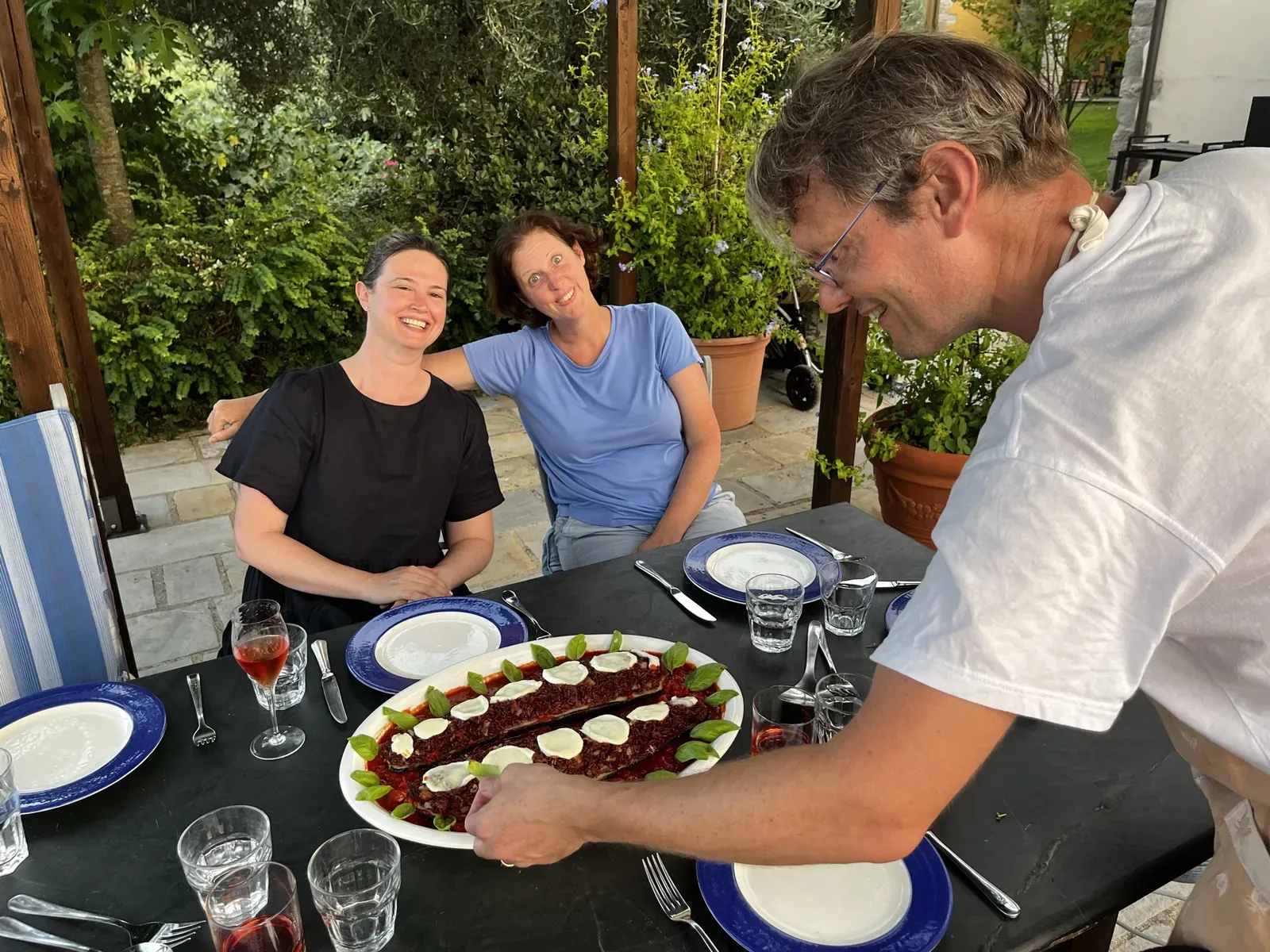
We enjoy welcoming guests to the farm. Many visitors to the farm are impressed with Samuel’s cooking skills, even if it is just simple, home-style dishes. Increasingly our food is homemade: pasta, gelato, bread, eggs, tomato sauce, mayonnaise, jams, honey, relish, peanut or pistachio butter.
Visitors also greatly enjoy the chance to learn mosaics and painting with Trina. Above all, though, visitors come here in pursuit of a rich Italian experience alongside local Italian farmers still pursuing a lifestyle tied into tradition and nature, which many have long since left or forgotten in heading for the metropolis.
We want both to foster strong local community ties and to introduce people from around the world to the joys of olive farming, olive oil, and a life in tune with nature. In pursuing the second aim we have sought to offer a kind of homestay programme. We invite people here at all stages in their life journey and offer them the chance to experience the Italian countryside, organic products straight from the garden, wild foraging, and traditional harvests all in a relaxed and convivial setting where we share time, experiences, thoughts, and dreams.
We have a great reputation as hosts, evidenced by the number of people who return year after year; by the positive feedback guests have offered; and by the occasional profile in newsletters and blogs for young people travelling the world.
We like doing as much as possible outside: meals overlooking the valley, picnics under the great oak tree in the fields, the outdoor white Carrara marble bath. Many guests have now experienced this grand bath hidden on a leafy natural terrace down in the gardens either early in the morning as the steam rises off the hot water or later at night when it is all dark and you are surrounded by gently flickering candles. It is hard to experience something which is more peaceful and relaxing: gradually you feel one with the surrounding countryside.
The enjoyment is not dissimilar when we go wild swimming in the large natural pond, although it is possible only when the water levels are high enough; and rain has been sorely missed these last few years. (If you haven’t read Waterlog by Roger Deakin then it is an excellent, genre-creating book that reminds us about the wonder of nature and how far we have now removed ourselves.) Occasionally there are races across the pond to the island on the far side.
Beside the pond is a small open BBQ and some nights we all collect there to grill vegetables or other dishes in the dark under the stars (no pollution here to hide the wondrous sky), gathered around the fire, gazing into the flames and smoke, faces red with the heat.
To reduce his carbon footprint, Samuel has never bought or owned a car and depends heavily on walking, public transport, or combining with others. We are always amazed how we can, if willing, manage a lifestyle that minimises unnecessary movement and so focus simply upon what is important; and, in doing so, come to know better and appreciate more our actual surroundings. As the film director and writer Werner Herzog has often emphasised: ‘the world reveals itself to those who travel on foot’.
The region
Umbria, where the farm is located, is known as the green heart of Italy; beautiful and comparatively unspoilt with its rolling hills and myriad hilltop towns. Here, more than in many other regions, visitors can feel the locality’s distinctive culture and unique connection with a past that goes back beyond the Romans, their republic and subsequent empire, to the Etruscans: a time which acknowledged individuality, when women had respect and power, and where people appreciated life as it was lived and experienced rather than as a search for ideals.
The valley
Our olive groves sit high in the Niccone Valley, a picturesque, unspoiled, hilly region located between the Tiber River and Lago Trasimeno in Umbria, Italy. The valley has been a much-travelled route in Italy’s history, and evidence of its strategic position can be seen in the many castles scattered among the hilltops.
From our olive groves you can see on one side Reschio Castle, now an ultra-luxury hotel, and on the other side architectural landmarks closely linked to the family Bourbon of Monte Santa Maria. Further up amongst the hills is Preggio, with its long history, its close ties to the papal state, and its spectacular views.
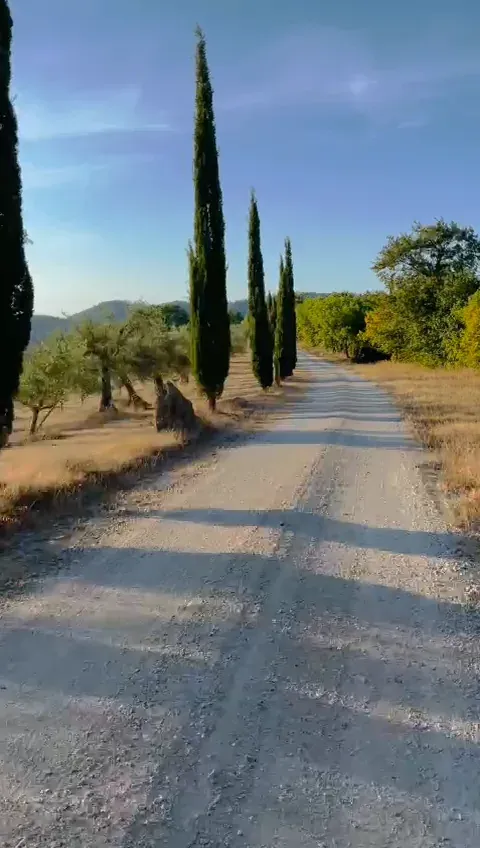
Our olive farm is at least 15 minutes’ drive from the valley road below or a good 30-minute run uphill along a dusty white gravel road, strada bianca. The property was completely abandoned by the mid-1900s, and no one has properly run this land as a farm since then, partly because the conditions for modern commercial farming are dauntingly tough.
Our farm is surrounded by nature, woods in particular: Italian cypress trees, oak trees, walnut trees, chestnut trees, pine trees, and scrub. The garden overflows with purple: wisteria, Siberian sage, lavender, paulownia. The scent of crushed wild mint, lavender, rosemary, and magnolia dances on the wind. Later, in autumn, we have lots of chestnuts, pine nuts, and, after rain, mushrooms, whether porcini (ceps) or the reclusive truffle from our gardens.
There are many animals including deer, rabbits, boar, foxes, owls, falcons, pheasant, squirrels, woodpeckers, porcupines, badgers, stoats, hummingbirds, and the occasional wolf.
Being in the country, we also have reptiles and multitudes of insects. Lizards recline lazily on our paths; lizards not unlike those in Caravaggio’s famous painting. And, at the right time of year, our lavender hums with bees during the day and our fields flicker with fireflies at night.
The broader region
The location of our farm is not so far from interesting and famous sites like Cortona, Sansepolcro, Anghiari, Perugia, Assisi, Arezzo, Spoleto, and Lake Trasimeno.
Cortona is the setting for the film version of Under the Tuscan Sun. Sansepolcro is famous for the great artist and geometrist, Piero della Francesca. Anghiari was the site of a battle significant for Florence and its destiny. The battle formed the inspiration for a lost fresco commissioned almost 70 years later which Leonardo da Vinci was meant to paint. Arezzo is the setting for the film Life Is Beautiful, winner of three Academy Awards.
On Lago Trasimeno you can visit the Isola Maggiore, on which they made lace. The broader area is famous for the Etruscans, who dominated middle Italy before the Romans, and for Hannibal, who scored one of his most splendid victories in the Trasimeno region. An interesting museum devoted to him is nearby.
Around Perugia and Assisi you can walk the Franciscan trail, part of a pilgrimage route associated with St Francis; while further to the southeast you can visit Norcia and admire its fantastic natural surroundings.
We are near the famed Tuscan wine regions around Montepulciano and Montalcino, and not so far from magnificent thermal baths. A bit further away is Florence, Urbino (home to Raphael), Orvieto with its amazing gothic cathedral, and Rome. There is also Viterbo not far, with its magnificent villas and gardens, such as the Palazzo Farnese. Near Viterbo is the outdoor sculpture garden, the ‘Park of Monsters’, while the famous Tarot Garden of Niki de Saint Phalle is also within reach. The ghost town of Civita di Bagnoregio near Orvieto is fun…
A lot happens in our neighbourhood, quite apart from the various festivals or sagre that celebrate local life and products. In the second week of July there is the Umbria Film Festival in the medieval town of Montone, on the other side of the Tiber from us. In mid-July there is Umbria Jazz, the biggest traditional jazz gathering in Italy, held outdoors in Perugia as well as other venues around town. Mid-September Perugia has its wine festival, and in mid-October there is the Eurochocolate festival, held through the streets and squares of Perugia, the town being home to Baci chocolate.
Perugia is also the home base for Brunello Cucinelli, the fashion brand, and the starting point for Luisa Spagnoli. Both individuals have truly inspiring stories. Cucinelli has built a philosophy and way of life into his business, like other famous Italians before him including Adriano Olivetti. Cucinelli’s book, Il sogno di Solomeo, is a worthwhile read. Perugia retains several traditional family-run craft industries; most interestingly a family atelier for stained glass and a family workshop for textiles.
From June to September Cinegatti offers an outdoor cinema both at the Frontone park in Perugia and in the cloisters of San Fiorenzo. The cinemas offer new and classic films to enjoy almost every night, out in the balmy weather typical of summer evenings in Umbria.
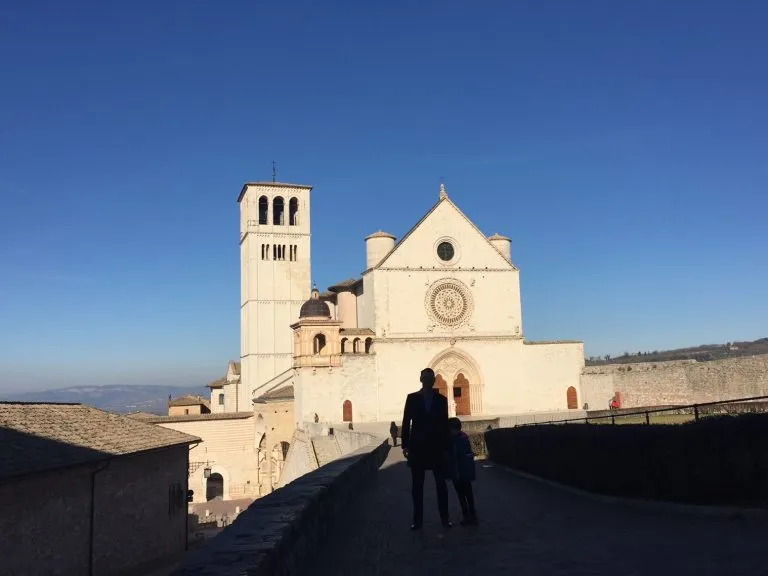
Elsewhere in the region, Gubbio has a famous candle race mid-May and Spoleto has its celebrated festival of classical music and the arts late June. Assisi is the home of St Francis and an amazing basilica. Norcia is home to St Benedict and is famous both for its natural surroundings, in particular wild flowers from mid-May to early July, and for its natural products.
Around us and all these towns we are blessed with open markets everywhere (depending on the day selling bread, fresh produce, or craft products) and either indoor or outdoor flea markets, mercatini dell’usato, selling everything from used items to antiques.
Contact us
s_thawley@yahoo.com
+39 331 835 1096
Niccone valley, Umbria, Italy
Instagram: @sambucaro.imagined
All images © 2024 by Trina O’Hara, Alix Thawley, Fabian Avis, Holly Clarke, Andrea Aps, Rafaela Faggion, Eva Hoitzing, Asha Douglas, Frida Maria Manske, Merel Spruit, Tara Blackmore and Amalia Kasdepke. Reproduction, even in part, is forbidden without the explicit approval of the rightful owner.